
Why Hybrid Inverters Are the Swiss Army Knife of Solar Power
The Solar Technology That Does It All: Understanding the Hybrid Inverter Off Grid
A hybrid inverter off grid is a single device that combines a solar inverter and a battery inverter into one unit — letting you generate power from solar panels, store it in batteries, and optionally use the grid or a generator as a backup, all without needing separate equipment.
Here’s what a hybrid inverter off grid does at a glance:
- Converts DC electricity from solar panels into usable AC power for your home
- Charges your battery bank using solar energy (or grid/generator when needed)
- Switches automatically between power sources — solar, battery, grid, or generator
- Keeps your appliances running even when the sun isn’t shining
- Can operate completely off-grid, or use the grid strictly as a backup without exporting power
Most homeowners dealing with high electricity bills or unreliable power start looking at solar. But traditional solar setups have a problem: they’re complicated. You need a solar inverter, a separate battery inverter, a charge controller, and a transfer switch — all wired together.
That’s exactly the problem hybrid inverters solve.
Think of it like upgrading from a toolbox full of single-use tools to one well-designed multi-tool. Instead of managing four separate devices, you get one intelligent unit that handles everything — and does it automatically.
The technology has matured significantly. As of 2026, hybrid inverters range from compact 1,500W units for tiny homes and RVs all the way up to 150kW commercial systems, with some setups scaling to 600kW of total capacity. Features like MPPT solar tracking, built-in battery management systems (BMS), and sub-10ms transfer switching — once reserved for expensive enterprise equipment — are now standard on mid-range consumer models.
Whether you’re powering a remote cabin, cutting ties with your utility company, or just want a reliable backup when the grid goes down, this guide breaks down exactly how hybrid inverters work and what to look for.
What is a Hybrid Inverter Off Grid System?
To understand why a hybrid inverter off grid is so revolutionary, we first have to look at what came before it. In a traditional setup, you had a “Solar Inverter” to turn panel power into AC for your TV, and a “Battery Inverter” to move power in and out of your storage bank. They didn’t always talk to each other very well.
A hybrid inverter is an all-in-one powerhouse. It takes the DC (Direct Current) from your solar panels and the DC from your batteries and converts them into the AC (Alternating Current) your fridge and lights need. But it’s more than just a converter; it’s the “brain” of your energy system.
In an off-grid context, “hybrid” usually means the unit can handle multiple inputs. While a purely off-grid inverter might only take solar and battery, a hybrid model can also accept a secondary AC input—like a gas generator or the utility grid. However, unlike “grid-tied” systems that feed power back to the electric company to spin your meter backward, an off-grid hybrid is typically configured to only pull power when needed, never sending it back out.
Modern units, such as the HYSUN 3.5KW Off-Grid Hybrid Solar Inverter, utilize pure sine wave technology. This is critical because it mimics the clean, smooth power provided by the utility company, ensuring your sensitive electronics like laptops and LED TVs don’t buzz or burn out. With dual conversion designs and high-performance power management, these units ensure that no matter where the energy is coming from, the output is steady and safe.
How Hybrid Inverters Manage Multi-Source Power Flow
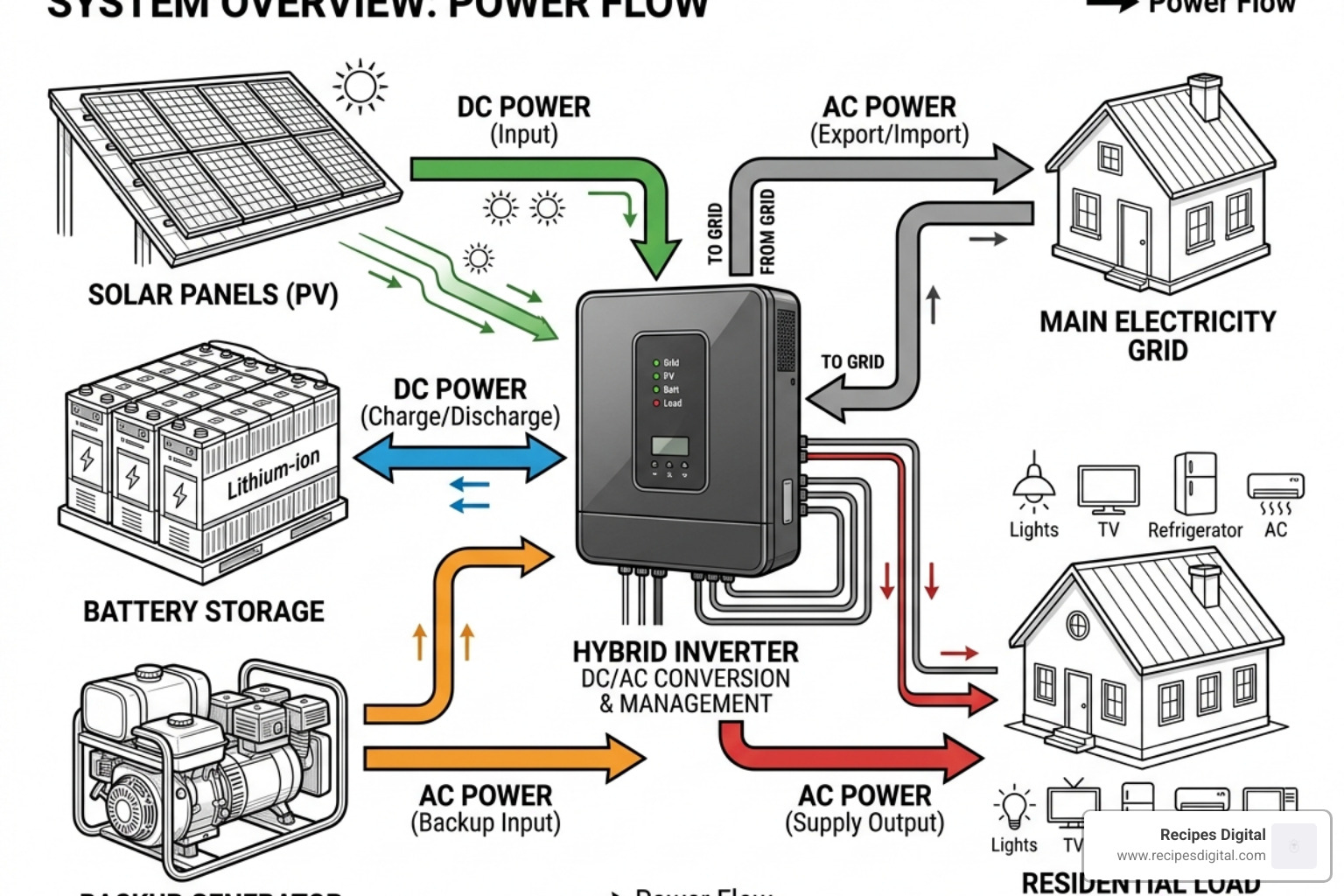
Managing power flow is where the “Swiss Army Knife” magic really happens. We like to think of the hybrid inverter as a high-speed traffic controller. It constantly monitors your solar production, battery level, and house demand to decide where every watt should go.
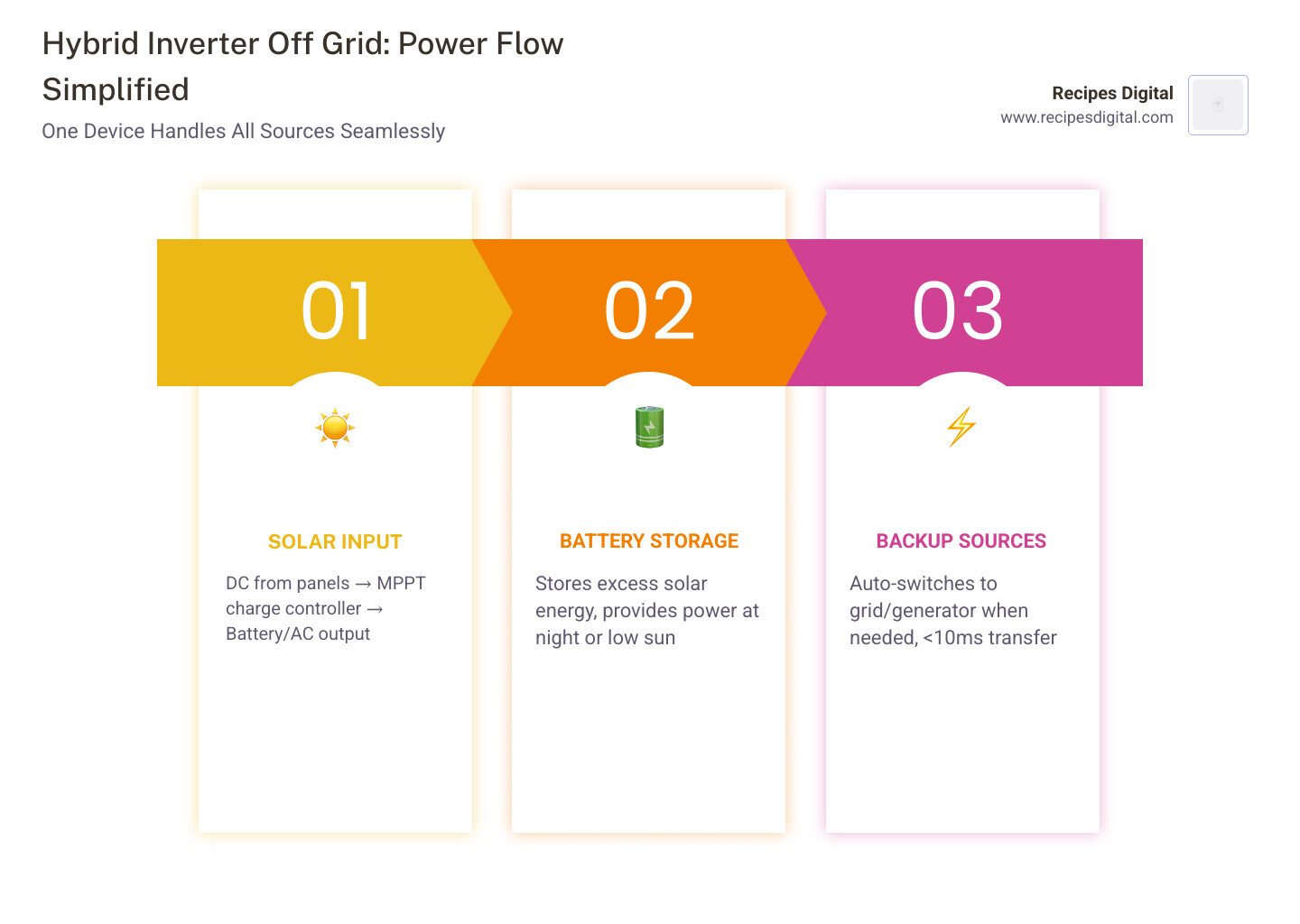
- Solar Priority: During a sunny April morning in 2026, the inverter sends solar power directly to your appliances. If there’s extra juice, it sends it to the batteries.
- Battery Charging: If the clouds roll in, the inverter seamlessly pulls from the battery to make up the difference.
- AC Priority / Grid-Assist: If the batteries run low at night, the inverter can tap into the grid or a generator.
- Generator Auto-Start: Many high-end models feature a “dry contact” or signal wire that can automatically tell a compatible generator to turn on when battery voltage drops too low.
This all-in-one hybrid inverter architecture with solar battery charging often includes a built-in Maximum Power Point Tracking (MPPT) controller. This technology acts like a variable transmission for your solar panels, constantly adjusting to extract the maximum possible wattage even in low-light conditions.
Furthermore, many commercial-grade units, like those in the ATESS HPS series, include an integrated bypass cabinet. This allows the system to switch the load entirely to the grid or generator if the inverter needs maintenance, ensuring you’re never left in the dark.
Essential Features of a Hybrid Inverter Off Grid
When you’re shopping for a hybrid inverter off grid, the spec sheet can look like alphabet soup. Let’s break down the technical bits that actually matter for your daily life.
Technical Specifications for Maximum Efficiency
Efficiency is the name of the game. Every time you convert power, you lose a little bit as heat. High-quality inverters now boast MPPT tracking efficiency of over 99.5%. This means almost every photon hitting your panels is turned into usable energy.
You’ll also want to look at the PV Input capacity. For instance, the popular EG4 6000XP supports up to 8000W of solar input, while the massive Sol-Ark 18K-2P can handle much more for large estates. The voltage range is also vital; many modern “high-voltage” strings allow for up to 500VDC input, which simplifies wiring and reduces the thickness of the cables you need to run from your roof.
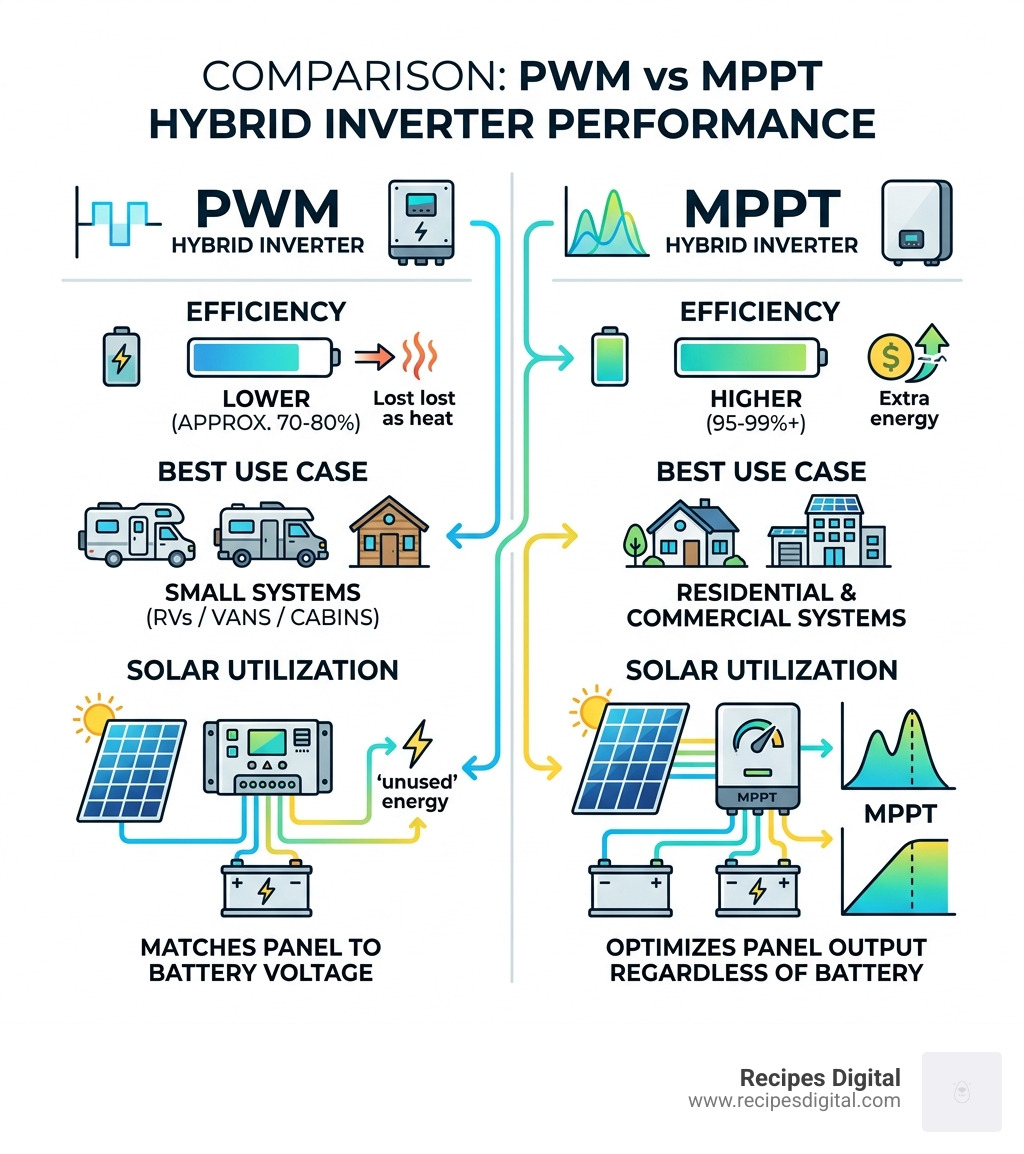
| Feature | PWM Hybrid Inverter | MPPT Hybrid Inverter |
|---|---|---|
| Efficiency | Lower (approx. 70-80%) | Higher (95-99%+) |
| Best Use Case | Small systems (RVs/Vans) | Residential/Commercial |
| Solar Utilization | Matches panel to battery voltage | Optimizes panel output regardless of battery |
| Cost | Budget-friendly | Premium investment |
Models like the Off Grid Solar Hybrid Inverter HY PWM Series offer a cost-effective entry point for smaller applications, while MPPT models are the gold standard for full-time off-grid living.
Reliability and the Hybrid Inverter Off Grid Experience
Reliability isn’t just about the unit not breaking; it’s about how it handles transitions. A key feature to look for is UPS-level transfer time. Models like the EPEVER QI Series offer a transfer time of less than 10ms. This is so fast that your desktop computer or gaming console won’t even flicker or reboot when the power source switches from solar to battery.
Other “must-have” reliability features include:
- Cold Start: The ability to turn the system on using just batteries when there is no solar or grid power available.
- BMS Communication: The inverter “talks” to your Lithium (LiFePO4) batteries to ensure they are charged at the perfect rate, extending their life by years.
- Environmental Protection: Look for built-in dust filters and an IP20 rating if the unit is installed in a garage or shed.
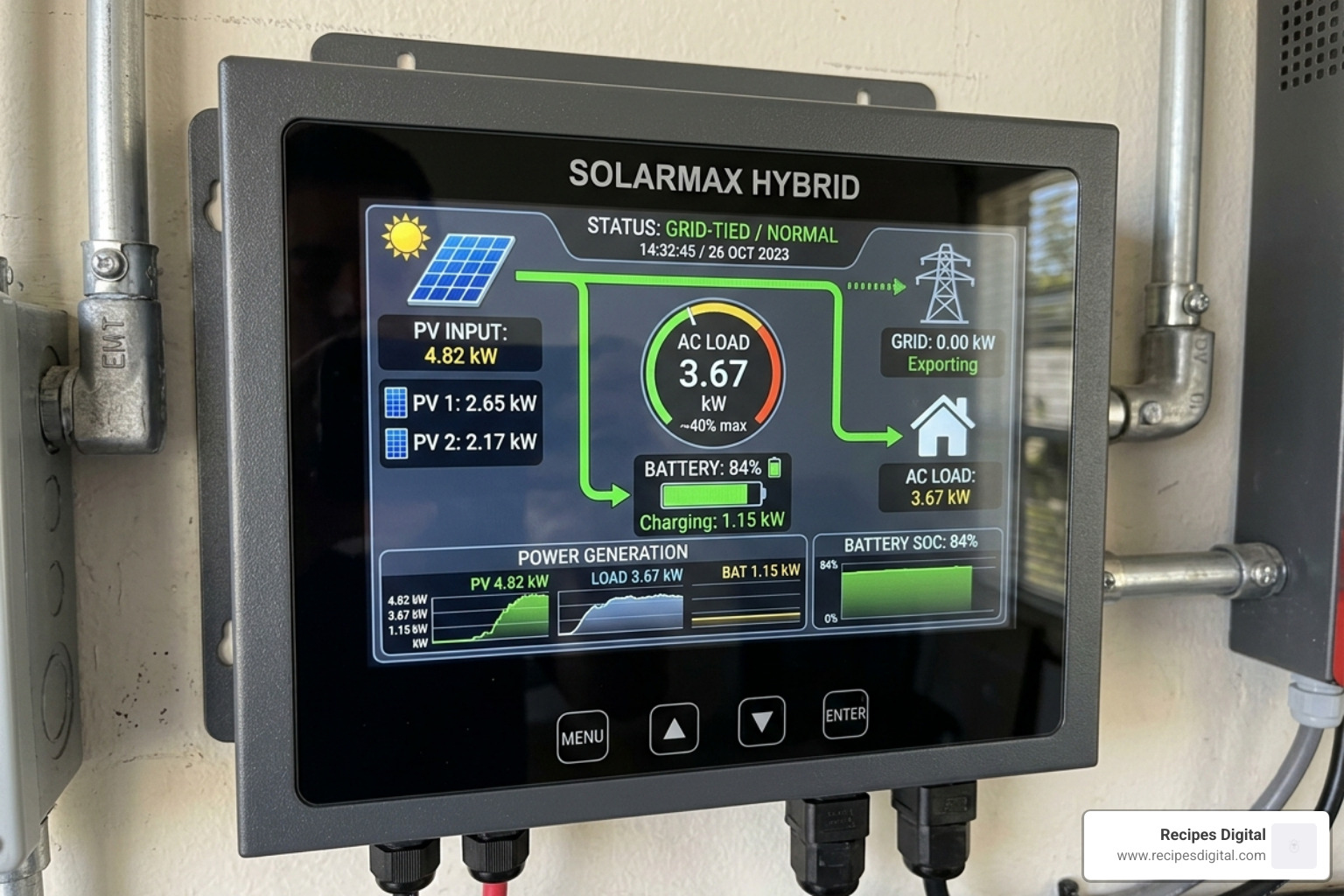
- Monitoring: Modern units feature LCD touchscreens and Wi-Fi monitoring via apps, allowing you to check your power production from your phone while you’re at the grocery store.
Key Benefits of Using a Hybrid Inverter Off Grid
Versatility and Scalability in Modern Solar
One of the biggest mistakes we see people make is buying a system that they outgrow in two years. Modern hybrid inverter off grid systems are designed to grow with you. Many units are “stackable,” meaning you can start with one 6kW unit and literally bolt on a second or third one later to double or triple your power output.
In commercial settings, systems can scale up to a staggering 600kW capacity. For the average homeowner, this modularity means you don’t have to pay for a massive system upfront. You can start small and add more panels and inverters as your budget allows. Additionally, features like peak-shaving allow the inverter to use stored battery power during the most expensive times of day (if you are still connected to the grid), saving you a fortune on “Time of Use” rates.
Simplified Installation and Cost Savings
Because the charge controller, inverter, and transfer switch are all in one box, the installation is much cleaner. This leads to reduced wiring and a more compact design. For us at Recipes Digital, we love this because it means fewer points of failure.
From a financial perspective, while a high-end hybrid inverter like the Sol-Ark 18K-2P ($7,300) or the NOVA 12K ($2,999) might seem expensive, you have to remember it replaces $4,000 worth of separate components and saves you roughly 30-50% in labor costs because the electrician has much less “inter-component” wiring to do. It’s a “buy once, cry once” scenario that future-proofs your home.
Common Applications for Hybrid Solar Technology
Where do we actually see these “Swiss Army Knives” in action? The applications are as diverse as the users:
- Remote Cabins: Units like the Qoltec Hybrid Solar Inverter Off-Grid 4kVA are perfect for weekend getaways, providing enough power for a fridge, lights, and a water pump without the noise of a generator.
- RV and Marine: Compact 12V or 24V hybrid inverters allow travelers to enjoy the comforts of home—like a microwave or coffee maker—while anchored in a quiet cove or parked in a national forest.
- Agricultural Use: Powering remote water booster pumps or electric fencing in areas where running utility lines would cost tens of thousands of dollars.
- Disaster Preparedness: Keeping the lights, medical equipment, and internet running during extended grid outages caused by storms.
- Sustainable Homesteading: Achieving true energy autonomy by cutting the cord with the utility company entirely.
Frequently Asked Questions about Hybrid Inverters
Can a hybrid inverter operate without a battery bank?
Yes and no—it depends on the model. Some modern hybrid inverters feature a “battery-less” mode where they can power loads directly from solar panels during the day. However, for a true hybrid inverter off grid experience, we always recommend a battery. Without one, your power will cut out the second a cloud passes over or the sun sets. Think of the battery as the “buffer” that keeps the system stable.
What is the difference between grid-assist and feeding power back to the grid?
This is a common point of confusion.
- Grid-Feeding (Grid-Tied): The inverter is synchronized with the utility company and sends excess solar power out to the street. This requires a “Net Metering” agreement and specific UL1741SB certifications.
- Grid-Assist (Off-Grid Hybrid): The inverter treats the grid like a backup generator. It can pull power in to charge batteries or run your house, but it has a physical or electronic “one-way valve” that prevents power from ever leaking back out to the grid.
How does transfer time affect sensitive electronics like computers?
If your inverter has a transfer time of 20ms or higher, your computer might “see” the gap in power and reboot, potentially losing your work. Hybrid inverters with UPS-level transfer (<10ms) switch so fast that the power capacitors inside your computer’s power supply can bridge the gap, meaning your electronics never even know the power source changed.
Conclusion
As we move through 2026, the shift toward energy autonomy is accelerating. The hybrid inverter off grid has proven itself to be the essential heart of the modern sustainable home. By combining complex functions into a single, intelligent, and scalable device, these inverters have lowered the barrier to entry for anyone looking to take control of their energy future.
At Recipes Digital, we believe that sustainable living shouldn’t be a headache. Whether you are looking for the latest digital resources on battery maintenance or trying to find the perfect panel configuration, we are here to provide the “digital recipes” for your modern, energy-independent lifestyle. The era of being at the mercy of rising utility rates and aging power grids is ending—and the era of the hybrid inverter is just beginning.
For more guides on solar batteries, panels, and energy-saving tips, visit Recipes Digital.
