
Powering Your Camper with a 30 Amp Solar Kit
Why a 30 Amp Solar Panel Kit Is the Sweet Spot for RV Power
A 30 amp solar panel kit is one of the most practical and popular choices for powering an RV, camper, or off-grid cabin. Here’s a quick overview of what you need to know:
What a 30 amp solar panel kit gives you:
- A charge controller rated at 30 amps, typically paired with 100W to 400W of solar panels
- Enough power to run lights, fans, a TV, a laptop, a CPAP machine, and phone chargers
- Support for 12V or 24V battery systems (AGM or lithium)
- A complete, expandable starting point for off-grid energy independence
Typical kit contents:
| Component | What It Does |
|---|---|
| Solar panels (100W–400W) | Captures sunlight and generates DC electricity |
| 30A charge controller (PWM or MPPT) | Regulates power flow to your battery |
| Wiring and connectors | Connects panels, controller, and battery |
| Mounting hardware | Secures panels to your roof or frame |
Living off-grid — or even just reducing your reliance on campsite hookups — used to mean complicated setups and expensive electricians. Not anymore. In April 2026, the market for compact solar kits has matured significantly. Leading manufacturers now offer kits that are genuinely plug-and-play, with everything you need to get started in a single box.
The 30 amp rating refers to the charge controller — the brain of your system. It determines how much current flows from your panels into your battery bank. Get this right, and the rest of the system falls into place.
Whether you’re a weekend camper or planning full-time van life, understanding what a 30 amp kit can (and can’t) do is the first step to building a reliable, affordable solar setup.
Understanding the 30 Amp Solar Panel Kit
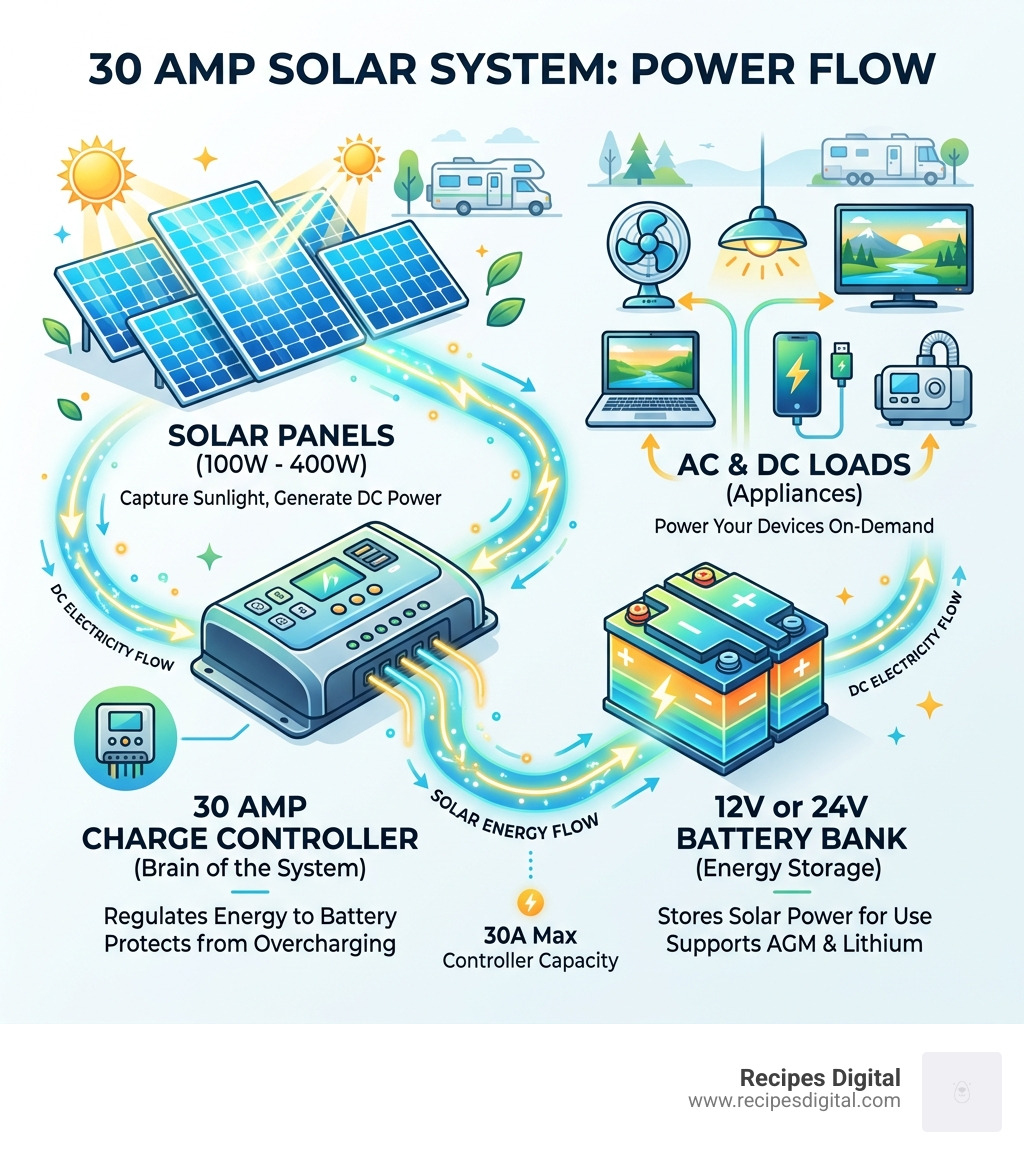
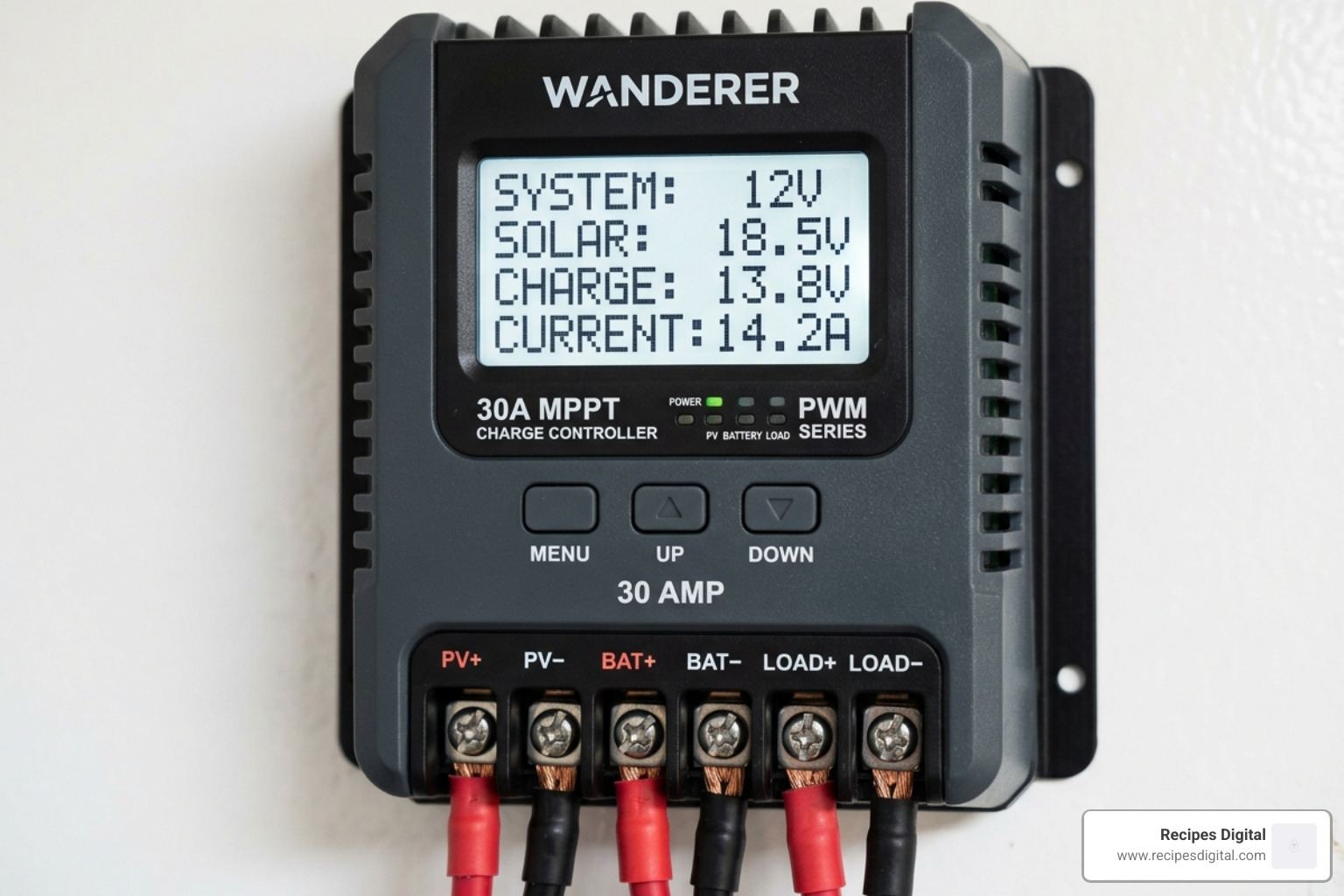
When we talk about a 30 amp solar panel kit, we are specifically highlighting the capacity of the charge controller. Think of the charge controller as a traffic cop. It sits between your solar panels and your battery, ensuring the electricity flowing in doesn’t “overstuff” or damage your batteries.
A 30 amp controller is remarkably versatile. In a standard 12V system, it can typically handle up to 400 Watts of solar power. If you decide to step up to a 24V system, that same controller can often manage up to 800 Watts. This flexibility makes it a favorite for those of us who might want to start small and grow our “sun-harvesting” array later.
Components and Power Estimates
A standard kit, such as a 300-Watt Monocrystalline Solar Panel Kit with 30 Amp Solar Charge Controller, usually includes three 100-watt panels. According to industry data, each 100W panel can produce between 400-600 Watt-hours (Wh) of power per day, depending on your location and the time of year. For a 300W kit, that’s roughly 1.2 to 1.8 kWh of daily energy — plenty to keep your gadgets charged and your lights on without hearing the hum of a generator.
Sizing Your System
Sizing isn’t just about the panels; it’s about the math. To determine if a 30 amp kit fits your life, we look at your “energy budget.” If you’re running a small fridge, some LED lights, and charging a couple of smartphones, a 200W to 300W kit is usually perfect. If you’re a digital nomad running multiple monitors and a Starlink dish, you’ll likely want to max out that 30 amp controller with a full 400W of panels.
Primary Applications for a 30 Amp Solar Panel Kit
Where does a 30 amp solar panel kit shine brightest? While we love them for campers, their utility goes far beyond the driveway.
- RV and Camper Power: This is the bread and butter of the 30A kit. Most standard RVs are already wired for 30 amp shore power, making a 30 amp solar controller a natural fit for the internal electrical logic.
- Off-Grid Cabins: For a small “getaway” cabin where you only need to power a few lights and perhaps a small radio or fan, these kits are an economical godsend.
- Marine Applications: Boats face unique challenges with space and salt. Many 30A kits come with corrosion-resistant hardware, making them ideal for keeping boat batteries topped off while moored.
- Sheds and Workshops: We’ve seen incredible setups where a 400W 12V Complete Solar Panel Kit transforms a backyard shed into a fully functional DIY workshop. It can even handle the occasional use of power tools!
- Backup Power: In an emergency, having a portable 30A kit and a decent battery means you can keep your communication devices and medical equipment (like CPAP machines) running when the grid goes dark.
Choosing the Right 30 Amp Solar Panel Kit for Your RV
Choosing a kit feels a bit like picking a travel partner — you need reliability, compatibility, and just enough “spark.” Here is what we recommend evaluating before you hit “buy”:
- Energy Consumption: Be honest about your habits. Do you leave the lights on? Do you use a hair dryer? Calculate your total watt-hours per day.
- Battery Bank Size: Your panels collect the energy, but your batteries store it. A 30 amp controller works beautifully with 100Ah to 400Ah battery banks. If you go with Lithium (LiFePO4), you’ll get more usable energy and a longer lifespan compared to traditional AGM batteries.
- Roof Real Estate: Solar panels take up space. A 100W panel is usually about 21 x 40 inches. Before ordering a 400W kit, grab a tape measure and make sure your RV roof isn’t too crowded by AC units and vents.
- Portable vs. Fixed: If you often park in the shade, “suitcase” style portable kits allow you to move the panels into the sun while your camper stays cool. If you prefer a “set it and forget it” lifestyle, fixed roof-mounted panels are the way to go.
Essential Components and Technical Specifications
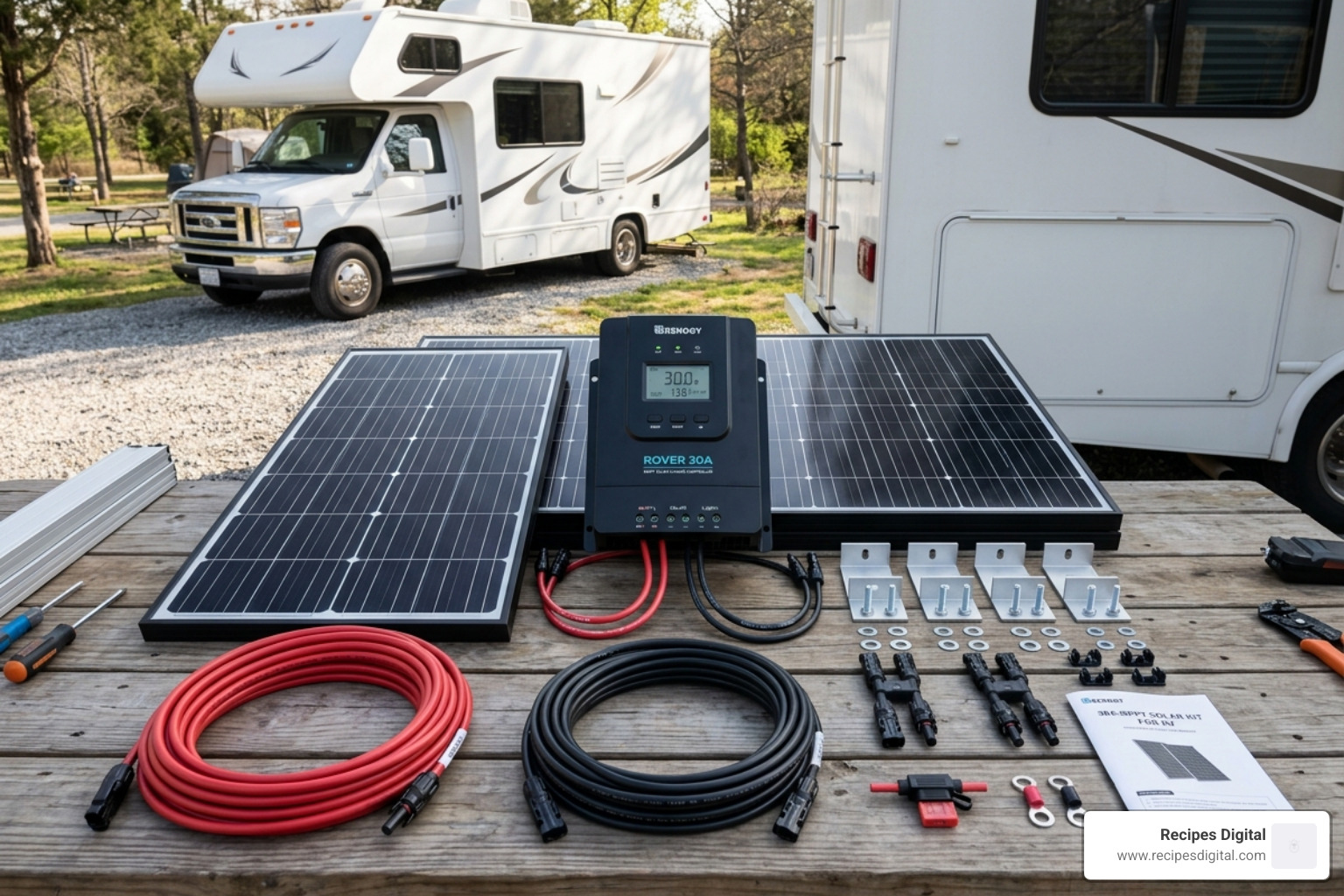
When you unbox your 30 amp solar panel kit, it can look like a giant Lego set for adults. Let’s break down what those parts actually do.
Solar Panels: Mono vs. Poly
Most modern kits use Monocrystalline cells. These are the sleek, dark panels you see on high-end installs. They are more efficient (often reaching 20% to 25% efficiency) than older Polycrystalline panels, which are blue-tinted and less space-efficient. For example, a high-efficiency 300W kit features module efficiency of up to 17.8%, while newer N-Type panels can push that even higher. If you want a neutral overview of solar cell types and how photovoltaic panels work, the U.S. Department of Energy solar basics guide is a helpful reference.
The Charge Controller: PWM vs. MPPT
This is the most critical choice in your kit.
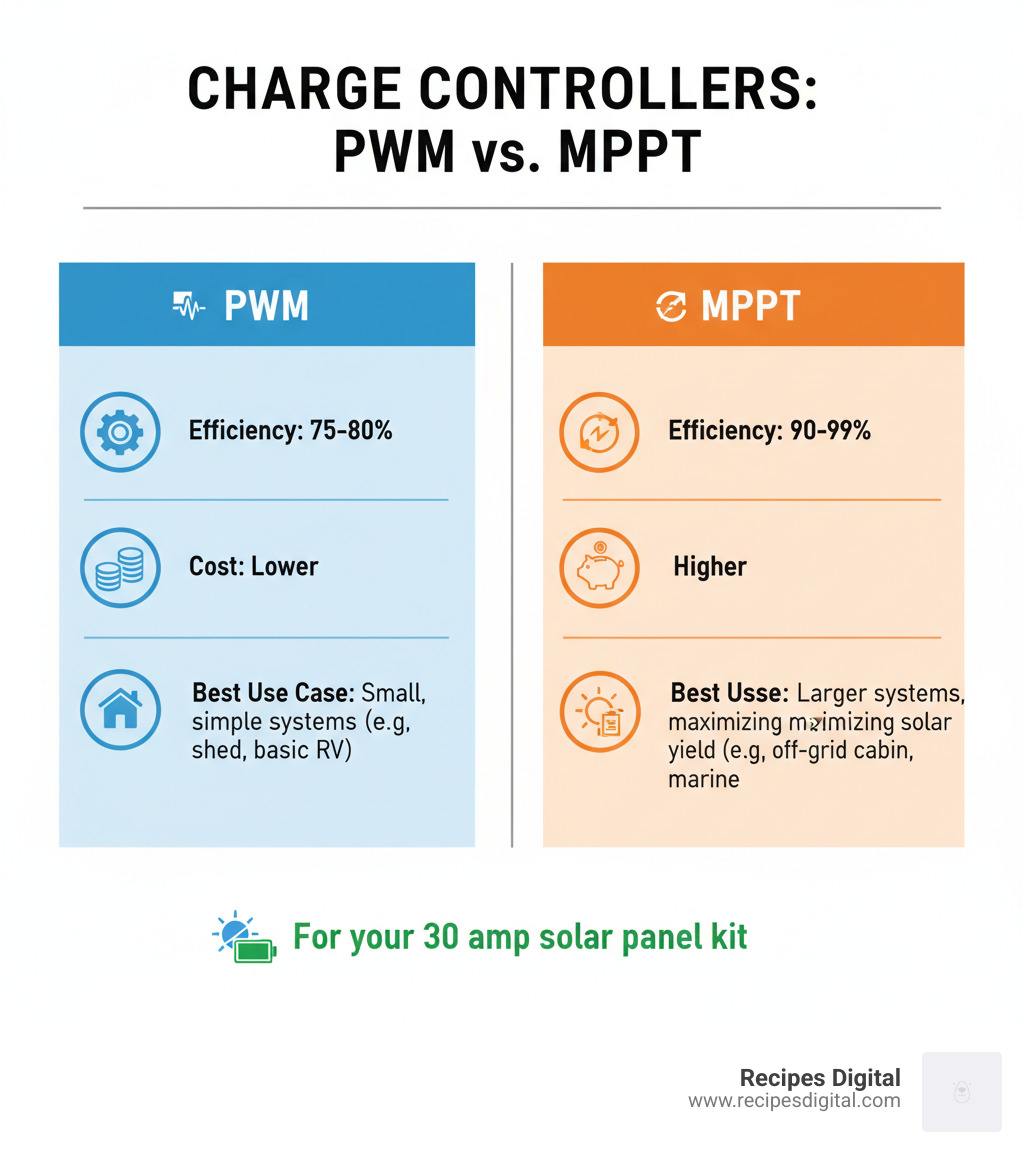
- PWM (Pulse Width Modulation): These are the “budget-friendly” option. They are simple and reliable but less efficient because they don’t capture the full potential of the panel’s voltage.
- MPPT (Maximum Power Point Tracking): These are the high-performers. An MPPT controller can squeeze up to 30% more power out of your panels by constantly adjusting to the “sweet spot” of voltage and current.
Batteries and Inverters
While not always included in every “base” kit, the battery and inverter are the other two legs of the tripod.
- Batteries: You’ll likely choose between AGM Deep Cycle (cheaper upfront, around $200) and LiFePO4 Lithium (more expensive, around $400, but lasts 10x longer).
- Inverters: If you want to use a standard wall plug (AC), you need an inverter. A 2000W or 3000W Pure Sine Wave inverter is standard for 30 amp systems, allowing you to run microwaves or coffee makers.
Key Features for Durability and Performance
Since your 30 amp solar panel kit will live outside, it needs to be tougher than a Two-Dollar steak. Here is what we look for to ensure your investment lasts through the 2030s:
- Weather Resistance: Look for an IP67 waterproof rating on the connectors and an IP65 rating on the junction boxes. This ensures that even a torrential downpour won’t short out your system.
- Sturdy Construction: Quality panels use tempered glass tops (scratch-resistant and anti-reflective) and anodized aluminum frames. These frames are designed to withstand high wind forces (up to 2400 Pa) and heavy snow loads (up to 5400 Pa).
- ShadowFlux and Bypass Diodes: Shading is a solar killer. If a leaf falls on one corner of a standard panel, the whole panel might stop producing. ShadowFlux technology and built-in bypass diodes allow the rest of the panel to keep working even if one section is in the shade.
- Heat Dissipation: Solar panels actually get less efficient as they get hotter. High-quality kits use TPT (Tedlar Polyvinyl Fluoride) back sheets to help dissipate heat and keep the cells cool.
- Warranties: A reputable kit should offer a “Power Warranty.” It’s standard in 2026 for panels to be warranted to retain at least 80% of their original efficiency for 25 years.
DIY Installation and System Expansion
One of the best things about a 30 amp solar panel kit is that you don’t need a PhD in electrical engineering to install it. Most kits are designed for DIY enthusiasts.
Step-by-Step Logic
- Mount the Panels: Use Z-brackets or mounting feet to secure the panels to your roof. Don’t forget the roof sealant (like Dicor) to keep things watertight!
- Wire the Controller: Always connect your battery to the charge controller first. This “wakes up” the controller so it knows whether it’s looking at a 12V or 24V system.
- Connect the Panels: Use the included MC4 connectors to plug your panels into the controller. These are usually “plug-and-play,” meaning they only fit one way — making it very hard to mess up the polarity.
- Fuse Everything: Safety first! Ensure you have fuses between the panels and the controller, and between the controller and the battery.
Parallel vs. Series Wiring
- Parallel: This keeps the voltage the same but increases the amperage. It’s great if you have occasional shading.
- Series: This increases the voltage but keeps the amperage the same. It’s often more efficient for MPPT controllers and allows for thinner wiring (like 12 AWG).
Scalability
The beauty of the 30A system is that it grows with you. If you start with two 100W panels, you can easily add two more later. Just ensure your total wattage doesn’t exceed the controller’s limit (usually 400W for 12V). If you need more, you can even look into massive residential solar kits, though those are usually reserved for mansions rather than mobile campers!
Frequently Asked Questions
How many solar panels can I use with a 30 amp controller?
On a standard 12V system, a 30 amp controller can handle about 400 Watts of solar power. This typically means four 100-watt panels. If you switch to a 24V battery system, the capacity doubles to 800 Watts. Always check your specific controller’s manual, as some high-end MPPT controllers can handle slightly more by “clipping” excess power.
What is the typical price range for a 30 amp solar kit in 2026?
Prices have stabilized significantly. A basic 100W “starter” kit can be found for as low as $150. A comprehensive 300W to 400W kit with a high-quality MPPT controller and mounting hardware usually ranges from $600 to $800. Remember to budget an extra $200-$400 for a quality deep-cycle battery, as these are rarely included in the base kit price.
Can a 30 amp solar kit run an RV air conditioner?
The short answer: Not by itself. An RV air conditioner requires a massive amount of power to start (the “surge”) and a lot of energy to keep running. To run an AC, you would need a very large lithium battery bank (400Ah+), a 3000W inverter with a “soft start” kit installed on the AC unit, and likely more than 400W of solar to keep the batteries from draining instantly. A 30 amp kit is better suited for all your other appliances, leaving the AC for when you’re plugged into shore power.
Conclusion
Embracing renewable energy doesn’t have to be a daunting task. A 30 amp solar panel kit represents the perfect balance of power, price, and simplicity for the modern adventurer. By choosing the right components — like high-efficiency monocrystalline panels and a robust MPPT controller — you can enjoy the silence of the wilderness without sacrificing the comforts of home.
At Recipes Digital, we believe in providing the digital recipes for modern living. Whether you’re looking for the best solar batteries, high-performance panels, or just a few energy-saving tips to extend your stay in the wild, we’re here to help you navigate the transition to sustainable energy.
Ready to cut the cord and start harvesting the sun? For More info about modern energy solutions, explore our full range of guides and resources to help you power your journey into the future. Safe travels, and may your batteries always be full!
