
Everything You Need to Know About the Hybrid Solar Power Inverter
Why a Hybrid Solar Power Inverter Could Change How You Use Energy
A hybrid solar power inverter is an all-in-one device that manages electricity from three sources at once — your solar panels, your battery storage, and the utility grid.
Here’s what you need to know at a glance:
- What it does: Converts DC electricity from solar panels into AC power for your home, charges batteries, and connects to the grid — all in one unit
- How it differs: Unlike a basic grid-tie inverter (which shuts off during blackouts), a hybrid keeps your home powered using stored battery energy
- Who it’s for: Homeowners who want backup power, lower electricity bills, and the flexibility to go off-grid now or in the future
- Typical lifespan: 10–15 years
- Common power ratings: 3kW to 15kW+ for residential use
Most homeowners start with a simple question: “Why is my electricity bill still high even with solar panels?”
The answer is often the inverter. A standard grid-tie inverter sends excess solar power to the grid — but it can’t store it, and it goes dark the moment the grid goes down.
A hybrid inverter solves both problems. It handles power conversion and battery management in a single device, giving you more control over how and when you use your solar energy.
Real users back this up. Community reports describe hybrid inverters from brands like Growatt, Solax, and PowMr running reliably for months to years — with one user describing their Solax 10kW three-phase unit as running “like a dream.”
Whether you’re trying to cut your electricity bill, prepare for outages, or eventually go fully off-grid, understanding how this technology works is the first step.
What is a Hybrid Solar Power Inverter?
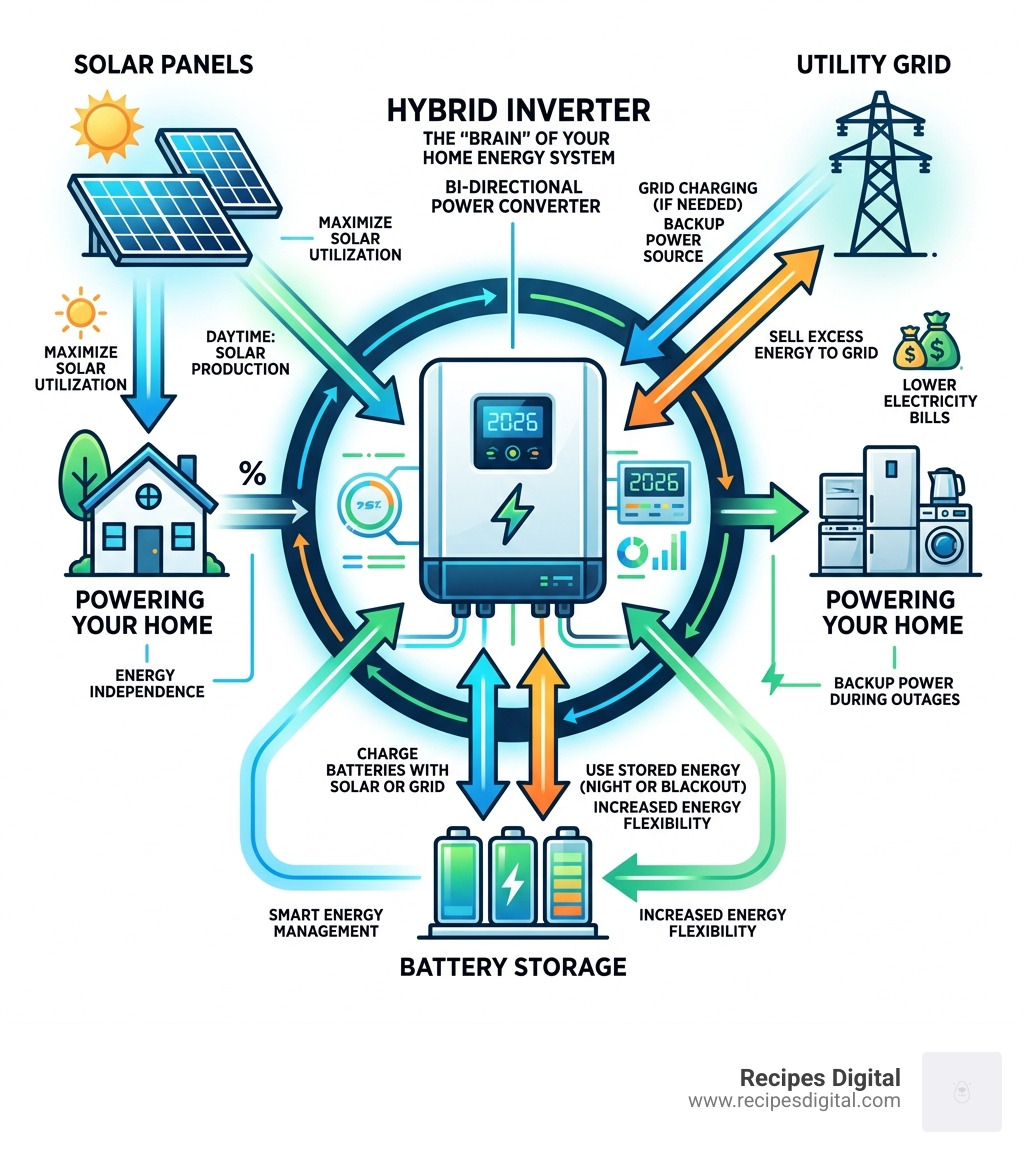
At its heart, a hybrid solar power inverter is the “brain” of a modern energy system. We like to think of it as a multi-talented traffic controller. In a traditional setup, you might need a solar inverter to handle the panels and a separate battery inverter to handle the storage. A hybrid unit combines these into a single, sleek all-in-one unit.
This technology is defined by its bi-directional power capabilities. Not only can it convert Direct Current (DC) from your panels into Alternating Current (AC) for your fridge and TV, but it can also take AC from the grid and turn it back into DC to top off your batteries on a cloudy day.
How the Hybrid Solar Power Inverter Differs from Traditional Models
When we look at the landscape of solar technology in April 2026, the differences between inverter types are clearer than ever:
- String Inverters: These are the traditional workhorses. They are simple and cost-effective but limited. If the grid goes down, they shut off for safety (anti-islanding), leaving you in the dark even if the sun is shining.
- Microinverters: These sit behind every individual panel. While great for shaded roofs, adding a battery to a microinverter system often requires “AC-coupling,” which can be less efficient than the integrated approach of a hybrid.
- Hybrid Inverters: These offer both grid-tie functionality and off-grid capability. They are programmable, meaning you can tell them exactly where to send power. Want to prioritize charging your battery before selling power back to the grid? You can do that. Want to use only battery power during expensive “peak” hours? A hybrid makes it easy.
Core Components and Functionality
To understand why a hybrid solar power inverter is so effective, we have to look under the hood at its core components:
- MPPT Trackers: Most high-end hybrids, like the SolaX X1-Hybrid-LV, feature multiple Maximum Power Point Trackers. These ensure your panels are always operating at their peak efficiency, even as the sun moves or clouds pass by.
- Built-in Charge Controllers: Whether it’s a PWM or a more advanced MPPT controller, this component manages the flow of electricity into your battery bank to prevent overcharging.
- Transfer Switch: This is the magic piece that enables “UPS-level” backup. When the grid fails, the internal switch disconnects from the utility and draws from the battery in milliseconds—often so fast you won’t even see your clocks blink.
- Pure Sine Wave Output: All reputable hybrids produce a pure sine wave, which is essential for protecting sensitive electronics like laptops and medical equipment.
Key Benefits and Technical Specifications
The biggest draw of a hybrid system is energy resilience. By combining solar and storage management, you gain a level of independence that a standard grid-tied system just can’t match.
| Feature | Grid-Tie Inverter | Off-Grid Inverter | Hybrid Inverter |
|---|---|---|---|
| Grid Connection | Yes | No | Yes |
| Battery Storage | No (Usually) | Yes | Yes |
| Works During Blackout | No | Yes | Yes |
| Sells to Grid | Yes | No | Yes (Programmable) |
| Efficiency (PV to AC) | 97-98% | 90-93% | 97-98% |
Understanding the Hybrid Solar Power Inverter Efficiency and Reliability
When we evaluate these systems, we look at several industry-standard benchmarks. Efficiency is key; for instance, many modern units boast a PV-to-AC efficiency of around 98%.
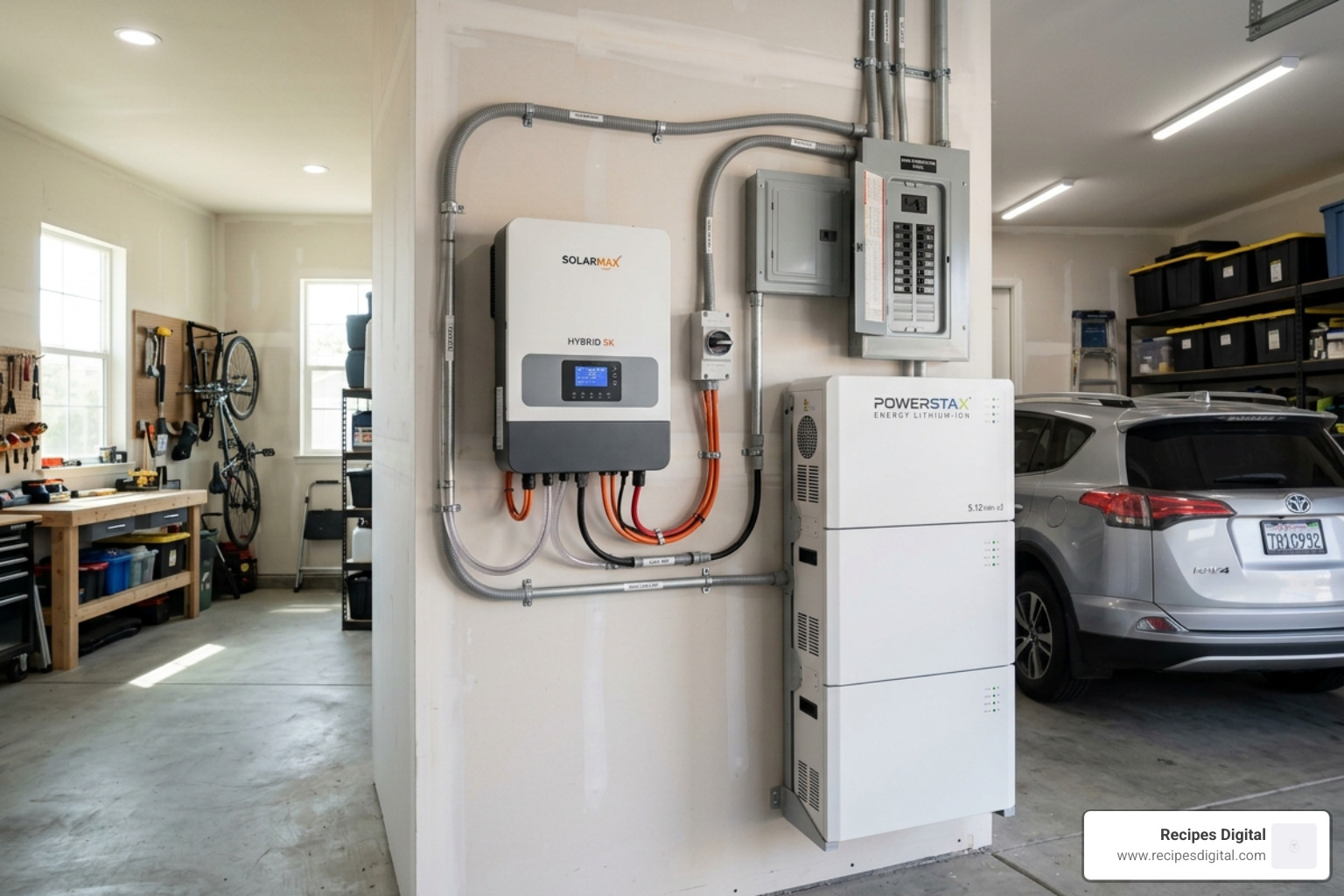
Reliability is another major factor. Most hybrid inverters are designed with a 10-15 year lifespan. To ensure they last that long, look for an IP65 rating, which means the unit is protected against dust and water—essential if you’re mounting it in a garage or on an exterior wall. Safety features like AFCI protection (Arc-Fault Circuit Interrupter) are also standard in 2026, helping to prevent electrical fires before they start.
Advanced Features for 2026 Systems
Modern systems have become incredibly “smart.” We are now seeing features that were considered experimental just a few years ago:
- Time-of-Use (TOU) Rates: The inverter can automatically discharge your battery when utility prices are highest and recharge when they are lowest.
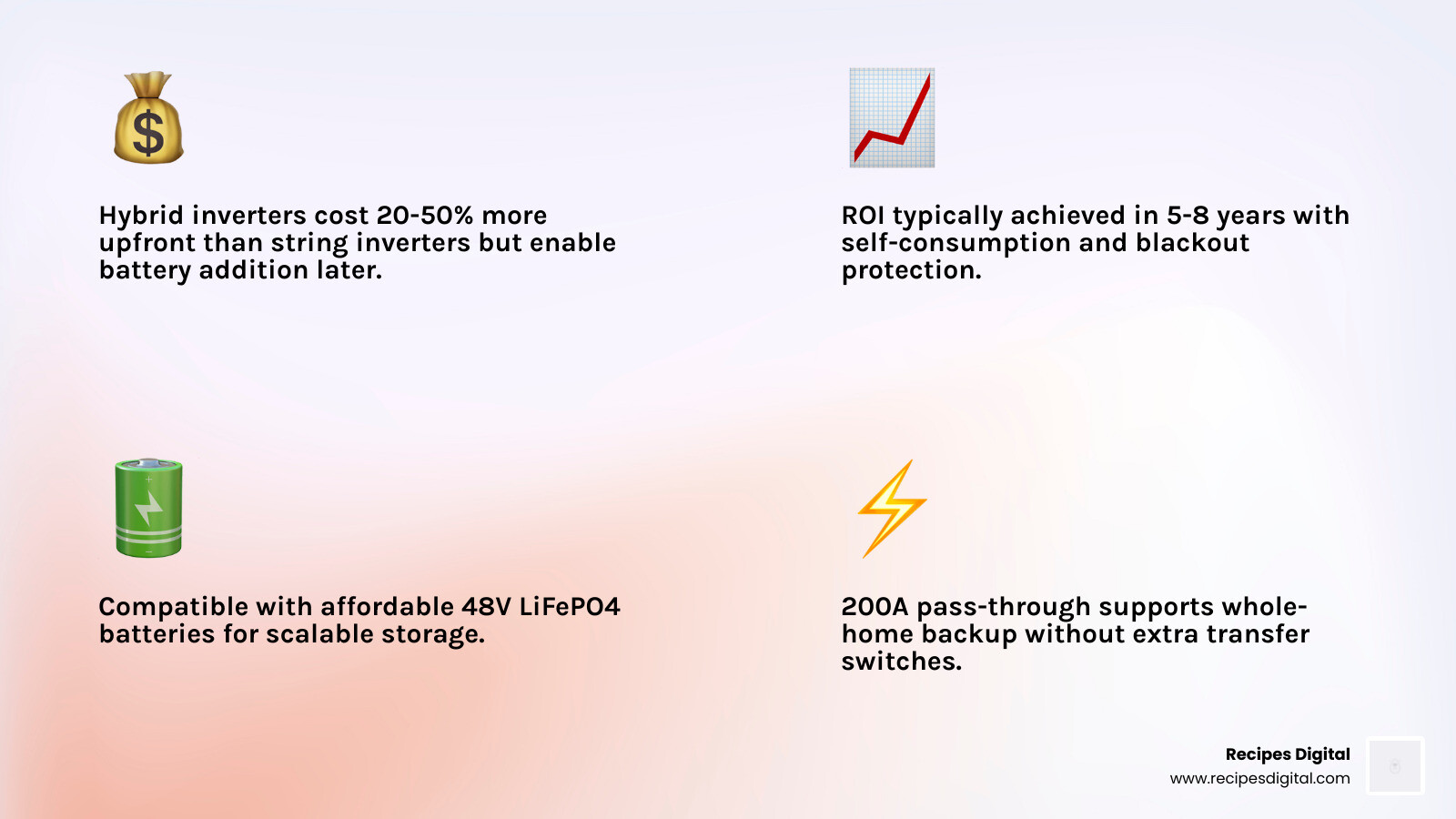
- 200A Pass-Through: High-capacity models now offer “whole-home” backup without needing complex external transfer switches.
- Parallel Stacking: If your energy needs grow, many brands allow you to stack up to 9 units in parallel to handle massive loads.
- Generator Integration: Some models, like the SolaX X1 HYBRID LV, allow for seamless integration with a backup generator for those long winter weeks with no sun.
Is a Hybrid Inverter Worth the Investment?
Determining if a hybrid solar power inverter is “worth it” depends on your specific goals. If you live in an area with a 100% reliable grid and generous net metering (where the utility pays you full price for your extra energy), a simple grid-tie system might offer a faster ROI.
However, for the rest of us, the hybrid is often the superior choice. It offers “future-proofing.” Even if you don’t buy a battery today, a hybrid inverter allows you to add one easily in a year or two without having to replace your entire inverter.
Factors Influencing Total System Cost
The price of a hybrid inverter is generally higher than a standard string inverter because you are essentially buying two devices in one. Several factors influence the final price tag:
- Power Ratings: A 3kW unit might cost under $1,000, while a heavy-duty 15kW three-phase unit like the Sunstone 15KW Hybrid will be a significantly larger investment.
- Battery Compatibility: Some inverters only work with specific (and expensive) brand-name batteries. Others are “open,” allowing you to use more affordable 48V LiFePO4 batteries.
- Installation Complexity: Because hybrids interact with your home’s main electrical panel and the grid, they require professional installation to meet safety standards.
Common Applications and Brand Considerations
The versatility of the hybrid solar power inverter makes it suitable for a wide range of “recipes” for modern living:
- Residential Backup: Keeping the lights, fridge, and internet running during a storm.
- Mobile Living: High-power hybrids are becoming popular for large RVs and boats that need to run air conditioning off-grid.
- Off-Grid Cabins: Using the grid as a backup “generator” only when the batteries run low.
- Tiny Homes: Space-saving all-in-one units are perfect for small footprints.
Reputable Brands and Market Reliability
The DIY and professional solar communities have provided a wealth of feedback on which brands to trust.
- Highly Regarded: Brands like Sol-Ark, EG4, and SolaX are frequently praised for their robust build quality and excellent customer support. The Sol-Ark 15K, for instance, is often cited as a gold standard for whole-home backup.
- Good Value: Growatt and PowMr offer more budget-friendly options that have shown surprising reliability. One user reported their PowMr 3500W hybrid has been running for three years without a single hiccup.
- Proceed with Caution: Many low-cost inverters found on mass-market e-commerce sites like Amazon (e.g., certain Eco-Worthy models) have received poor ratings. These often suffer from lower-quality components and a lack of local technical support. When it comes to your home’s electrical heart, we always recommend sticking with brands that offer clear technical documentation and a solid warranty (look for 10 years).
Frequently Asked Questions about Hybrid Inverters
Can I use a hybrid inverter without a battery?
Yes! This is one of the best ways to start. You can install the hybrid solar power inverter and solar panels now, using it in “grid-tie” mode. This allows you to lower your bills immediately while keeping the door open to add a battery later without any rewiring.
How long do hybrid inverters last compared to panels?
Solar panels are famous for lasting 25–30 years. Inverters, however, are filled with complex power electronics that work hard every day. You should expect a high-quality hybrid inverter to last between 10 and 15 years. It is common to replace the inverter once during the lifetime of your solar panels.
Can a hybrid inverter help me go completely off-grid?
While many hybrids have “off-grid” modes, going 100% off-grid requires very careful battery sizing. You need enough storage to last through several days of rain. However, a Hybrid Inverter is the perfect tool for “grid-assisted” living, where you stay connected to the utility but rarely ever draw power from it.
Conclusion
The shift toward the hybrid solar power inverter represents a move toward smarter, more resilient living. No longer are we at the mercy of a single utility provider or a fluctuating grid. By choosing a system that can intelligently manage solar, battery, and grid power, we take a massive step toward true energy independence.
At Recipes Digital, we believe that the right information is the most important component of any solar installation. Whether you are looking for energy-saving tips or the latest data on battery accessories, we are here to provide the digital resources you need for sustainable, modern energy solutions.
Ready to take control of your home’s power? Explore our guides and start your solar journey today.
