
Shockingly Simple Ways to Save Energy and Money
Why Your Energy Bill Is Higher Than It Needs to Be
The 10 energy saving tips every homeowner should know are:
- Optimize your thermostat – Set to 68°F in winter and 78°F in summer
- Seal air leaks – Caulk windows and doors to stop heat escaping
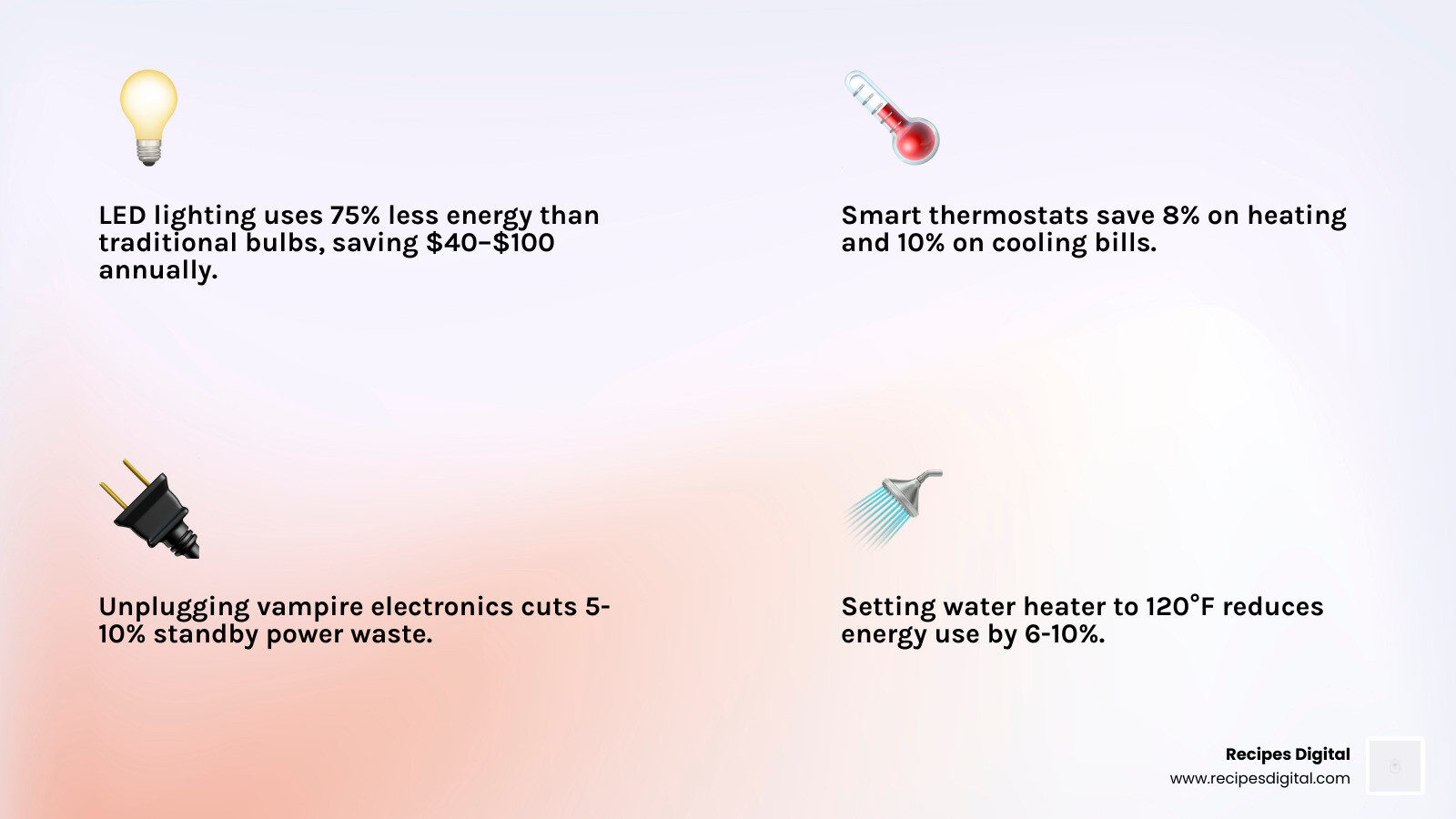
- Switch to LED bulbs – Use 75% less energy than incandescent bulbs
- Maintain your HVAC – Check air filters monthly for peak efficiency
- Lower your water heater – Set to 120°F to cut bills by 6-10%
- Improve insulation – Aim for R-38 to R-49 in your attic
- Use fans strategically – Make rooms feel 4-6°F cooler without AC
- Upgrade laundry habits – Wash in cold water and run full loads
- Manage window coverings – Open south-facing windows in winter for free heat
- Unplug vampire electronics – Standby power wastes 5-10% of your home’s energy
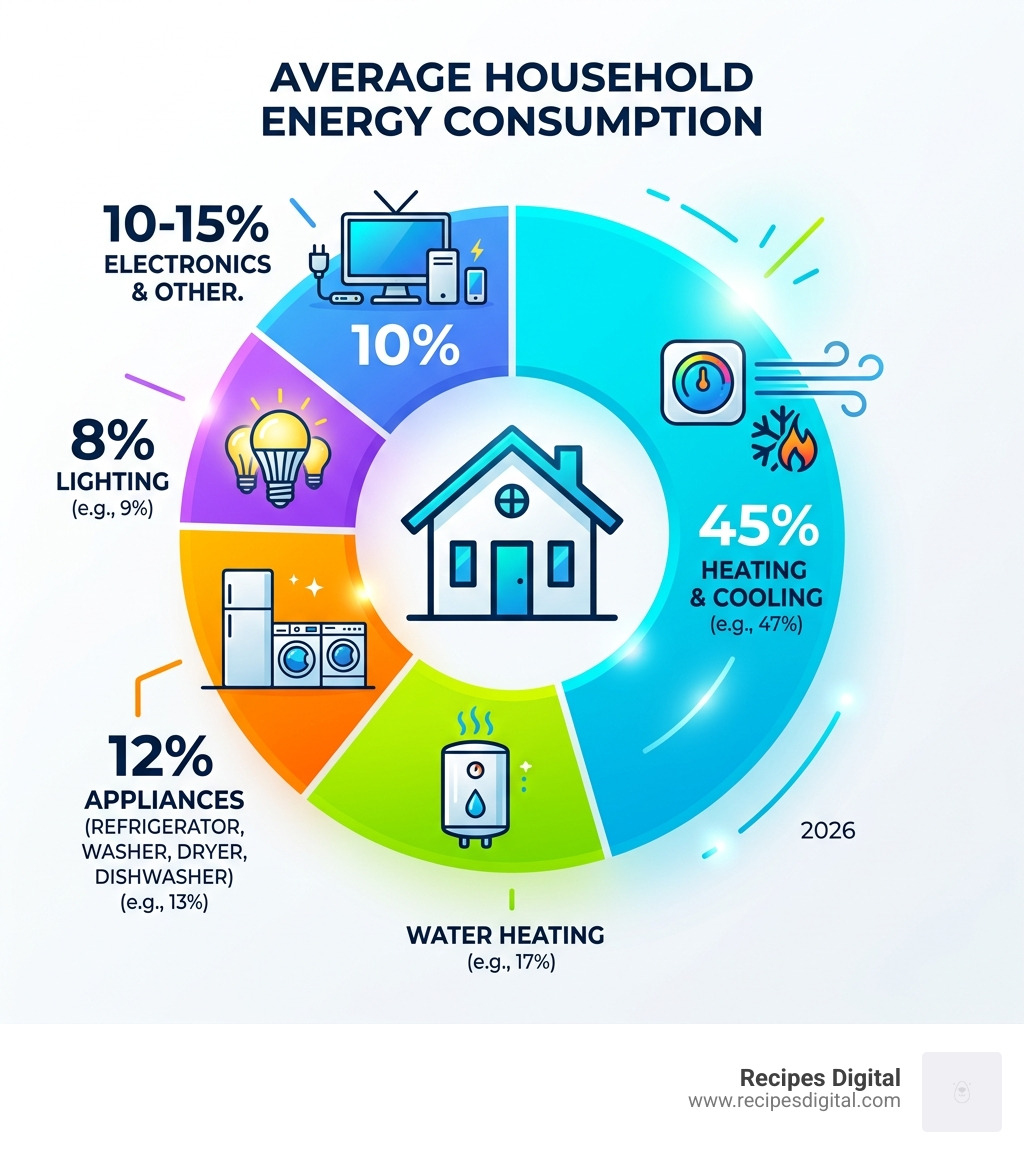
Almost half of the average American household’s annual energy bill — more than $900 — goes straight to heating and cooling. That’s before you even count lighting, hot water, and appliances.
And yet, most homes are leaking energy in ways that are surprisingly easy to fix.
Your heating system alone uses more than half of all the energy in your home. Windows can let up to 30% of that heat escape. Electronics quietly drain power even when you’re not using them. It adds up fast.
The good news? You don’t need a full home renovation to make a real dent in your bills. Many of the most effective changes cost little to nothing — just a bit of know-how and the right habits.
Whether you’re trying to cut costs, reduce your carbon footprint, or take a step toward energy independence, the tips in this guide are practical, proven, and worth starting today.
The Top 10 Energy Saving Tips for Every Home
As we navigate through April 2026, the technology available to help us manage our homes has never been better. At Recipes Digital, we believe that modern living should be sustainable and affordable. By understanding your “building envelope”—the physical barrier between your conditioned indoor air and the outside world—you can take control of your utility costs.
Implementing these 10 energy saving tips isn’t just about sacrifice; it’s about being smarter with the resources we have. To get a head start, you can check out the ENERGY STAR Guide to Saving Energy for a deep dive into certified efficiency.

1. Optimize Your Thermostat and Smart Devices for 10 Energy Saving Tips
One of the most effective ways to slash your bills is to simply stop heating or cooling an empty house. We recommend setting your thermostat to 68°F during the winter while you’re home and awake, and 78°F during the summer.
Did you know that you can save as much as 3% on your energy bill for every degree you lower your thermostat in the winter? If you’re willing to bundle up in a cozy sweater, those savings add up fast. For those who tend to forget to adjust the dial, an ENERGY STAR certified smart thermostat is a game-changer. These devices can reduce heating and cooling bills by over 8%, saving the average household about $50 to $100 a year depending on how often the home is occupied.
A common mistake is setting the AC to a “colder than normal” temperature to cool the house faster. In reality, AC units are designed to cool your home about 15-20 degrees less than the outside temperature. Setting it to 60°F when it’s 95°F outside won’t cool the room faster; it will just make the system run non-stop, wasting energy and increasing wear and tear.
2. Seal Air Leaks and Weatherize Your Windows
Think of your home like a thermal mug. If the lid is cracked, your coffee gets cold. Up to 30% of your home’s heat can escape through low-efficiency windows and tiny gaps in your home’s structure.
We suggest taking a weekend to hunt for drafts. Common culprits include utility cut-throughs, gaps around chimneys, recessed lights, and unfinished spaces. Use caulk for permanent gaps and weatherstripping for moving parts like doors and windows.
If you have older windows, you don’t necessarily need to replace them immediately to see a difference. Using heavy-duty, clear plastic sheets or film on window frames during the winter can significantly reduce infiltration. For a more permanent solution, replacing old windows with ENERGY STAR models can cut your energy bill by as much as 15%.
3. Upgrade to LED Lighting and Smart Power Strips
Lighting is the “low-hanging fruit” of energy efficiency. Traditional incandescent bulbs are essentially small heaters that happen to produce a little light. In contrast, LED bulbs use 75% to 90% less energy and last at least 25 times longer.
Replacing just the five most frequently used light fixtures in your home with ENERGY STAR certified LEDs can save you about $40 a year. But the savings go beyond the bulb. We also need to talk about “phantom load” or “vampire energy.” This is the power consumed by electronics even when they are turned off.
Standby energy accounts for 5% to 10% of residential energy use. By using smart power strips, you can cut power to multiple devices—like your TV, soundbar, and game console—with one switch. Speaking of game consoles, keep in mind that watching movies on a console consumes five times the energy of a regular DVD or Blu-ray player!
4. Maintain Your HVAC System and Air Filters
Your heating and cooling system is the heart of your home’s comfort, but it’s also the biggest energy hog. To keep it running efficiently, you must check your air filters at least once a month. A dirty filter restricts airflow, forcing the system to work harder and use more electricity. We recommend replacing filters every 60 days, or more often if you have pets.
Beyond the DIY filter swap, a professional inspection is vital. Having an expert tune up your HVAC system twice a year (spring and fall) ensures that everything is lubricated and the refrigerant levels are correct. Proper insulation and maintenance on a ventilation system can reduce heating and cooling expenses by up to 20%. If your system is over 10 years old, upgrading to an ENERGY STAR certified heat pump could save you up to $500 per year.
5. Adjust Your Water Heating Habits
Water heating is the second-largest energy expense in most homes, accounting for roughly 18% of total energy consumption. Most water heaters are factory-set at 140°F, which is not only a scalding risk but also a waste of money.
By lowering your water heater temperature to the “warm” setting of 120°F, you can trim 6% to 10% from your energy bill. To go even further, consider these steps:
- Install low-flow showerheads: A 10-minute shower with a 2.5 GPM head saves 5 gallons of water over a bath and can save up to $145 annually on electricity.
- Insulate your pipes: Insulating the first six feet of hot and cold water pipes helps retain heat.
- Wash in cold water: Nearly 90% of the energy used by a washing machine goes toward heating the water. Modern detergents are designed to work perfectly in cold cycles.
6. Maximize Insulation in Attics and Walls
If your home feels drafty despite sealing the windows, your insulation might be the culprit. The U.S. Department of Energy recommends that attics have an insulation level of R-38 to R-49. In practical terms, this means about 12 to 15 inches of fiberglass or cellulose insulation.
Insulation acts as a thermal barrier, keeping the heat inside during the winter and outside during the summer. If you can see your floor joists in the attic, you likely need more insulation. Adding just a few inches can make a massive difference in your comfort and your wallet. Don’t forget to check the insulation in your basement, crawlspaces, and around ductwork to ensure your conditioned air actually reaches the rooms it’s intended for.
7. Use Fans and Ventilation Strategically
Fans don’t actually cool rooms; they cool people. They create a wind chill effect that can make a room feel 4° to 6° cooler than it actually is. This allows you to raise your AC thermostat and save money without losing comfort. Just remember: turn fans off when you leave the room!
In the winter, you can flip the switch on your ceiling fan to run clockwise at a low speed. This creates an updraft that pushes warm air trapped at the ceiling back down into the living space. Additionally, use exhaust fans in bathrooms and kitchens sparingly. These fans can pull a house full of warmed or cooled air out of the building in just one hour if left running unnecessarily.
8. Adopt Energy-Efficient Laundry and Dishwashing Habits
We often run our appliances out of habit rather than efficiency. To save more, only run your dishwasher and washing machine when you have a full load. Washing full loads of laundry can save more than 3,400 gallons of water each year.
When it comes to drying, the lint trap is your best friend. Cleaning it before every load can save you up to $34 a year. If you have the space, line drying clothes is a “free” way to save around £50–£60 annually. For dishwashing, avoid the “heated dry” cycle and use the air-dry setting instead. Also, stop pre-rinsing! Modern dishwashers built after 2011 are designed to handle food particles, and pre-rinsing actually uses 2-5 times more water than the machine itself.
9. Manage Seasonal Energy Use with Window Coverings
Your windows can be a source of free heat or a major source of heat gain. In the winter, open curtains on south-facing windows during the day to let the sun naturally warm your home. This simple habit can save between 2% and 12% on your heating bill.
In the summer, do the opposite. Close blinds and drapes on the sunny side of the house to block out the heat. Strategically planting deciduous trees on the south side of your home is another long-term tip; they provide shade in the summer but drop their leaves in the winter to let the sunlight through.
10. Unplug Vampire Electronics and Use Small Appliances
As we mentioned earlier, “vampire” electronics are a real drain. Beyond using power strips, consider how you cook. Using smaller appliances like a microwave or toaster oven for small portions can save 50% energy compared to heating up a full-sized oven.
Another hidden energy hog is the ice-maker in your refrigerator. Turning it off when you don’t need a full bin can save 15-20% of your refrigerator’s energy usage. Every little bit counts when you are looking to optimize your home for the future.
How Much Can You Actually Save?
Implementing these 10 energy saving tips isn’t just a hobby; it’s a financial strategy. While some actions require an upfront investment (like new windows or a smart thermostat), many are absolutely free.
| Action | Estimated Annual Savings | Difficulty |
|---|---|---|
| LED Lighting Upgrade | $40 – $100 | Easy |
| Smart Thermostat | $50 – $100 | Medium |
| Setting Water Heater to 120°F | 6% – 10% of bill | Easy |
| Sealing Air Leaks/Caulking | Up to 15% of bill | Medium |
| High-Efficiency Windows | Up to 15% of bill | High |
| Heat Pump Water Heater | $425 – $550 | High |
By combining these steps, many homeowners find they can reduce their total energy consumption by 20% to 30%. For those looking for even deeper savings, conducting a home energy audit is a great next step. Many utility companies offer these for free or at a discounted rate to help you identify exactly where your home is losing money.
Seasonal Strategies: 10 Energy Saving Tips for Summer vs. Winter
The way we manage our homes changes with the seasons. In April 2026, we are right in that transition period where we might be using the heater one day and the AC the next.
For more specific seasonal advice, we highly recommend checking out these resources:
- Spring and Summer Energy-Saving Tips | Department of Energy
- Fall and Winter Energy-Saving Tips | Department of Energy
Implementing 10 Energy Saving Tips During Peak Seasons
During the peak of summer, humidity control is just as important as temperature. Using your bathroom exhaust fan for 15 minutes after a shower helps remove moisture, which makes the air feel cooler and reduces the load on your AC.
In the winter, the focus shifts to heat retention. Keep your fireplace damper closed when you aren’t using it. An open damper is like leaving a window open; it allows all your warm air to go right up the chimney. If you do use your fireplace, lower your thermostat to 50-55°F so you aren’t paying to heat the house twice.
Frequently Asked Questions about Home Efficiency
What are the easiest low-cost actions to start with?
The absolute easiest things we recommend are switching to LED bulbs, lowering your water heater to 120°F, and washing your laundry in cold water. These three actions require almost no effort but provide immediate “shocks” of savings on your next utility bill. Unplugging chargers when they aren’t in use is another zero-cost habit that stops “vampire” draw.
How often should air filters be checked or replaced?
We suggest inspecting your filter every 30 days. If you hold it up to a light and can’t see the light shining through, it’s time for a change. Most households should replace them every 60 to 90 days. If you have allergies or pets, you might want to look into filters with higher MERV ratings, but be careful—filters that are too thick can actually reduce airflow and hurt efficiency.
What temperature should my water heater be set to?
Set it to 120°F. This is the sweet spot recommended by the Consumer Product Safety Commission. It’s hot enough to kill bacteria and provide a comfortable shower, but cool enough to prevent accidental scalding and save you 6% to 10% on your water heating costs.
Conclusion
At Recipes Digital, we are passionate about helping you transition to a more sustainable lifestyle. Whether you are looking into solar batteries or simply trying to master these 10 energy saving tips, every step you take brings you closer to energy independence.
Saving energy doesn’t have to mean living in the dark or shivering through the winter. By leveraging modern technology like smart thermostats and LED lighting, and by maintaining your home’s “envelope” through insulation and air sealing, you can enjoy a more comfortable home for a fraction of the cost.
Ready to take the next step? Explore our modern energy solutions to see how solar panels and accessories can further protect you from rising utility costs. The future of energy is in your hands—let’s make it efficient!
