
Everything You Need to Know About Solar Battery Chargers
What a Solar Battery Charger Does (and Why You Might Need One)
A solar battery charger uses sunlight to charge and maintain batteries — no wall outlet required. Here’s a quick summary:
- What it does: Converts sunlight into DC electricity to charge 12V, 24V, or other batteries
- Who it’s for: Car owners, RV users, boaters, campers, and anyone wanting off-grid power
- Common uses: Maintaining vehicle batteries, charging phones while camping, powering remote equipment
- Price range: Around $15 to $700 depending on size and features
- Key types: Trickle chargers, battery maintainers, portable panels, and high-wattage systems
Dead batteries are frustrating. A car sitting in the driveway for weeks, a boat in winter storage, an RV parked between trips — they all quietly drain over time.
A solar battery charger solves that problem without running an extension cord or paying for electricity.
But solar chargers aren’t all the same. A tiny 5-watt panel for a motorcycle is very different from a 200-watt folding unit for an e-bike. Choosing the wrong one means wasted money — or a battery that still won’t start your engine.
This guide covers everything you need to know: how they work, which type fits your situation, what specs actually matter, and how to size one correctly.
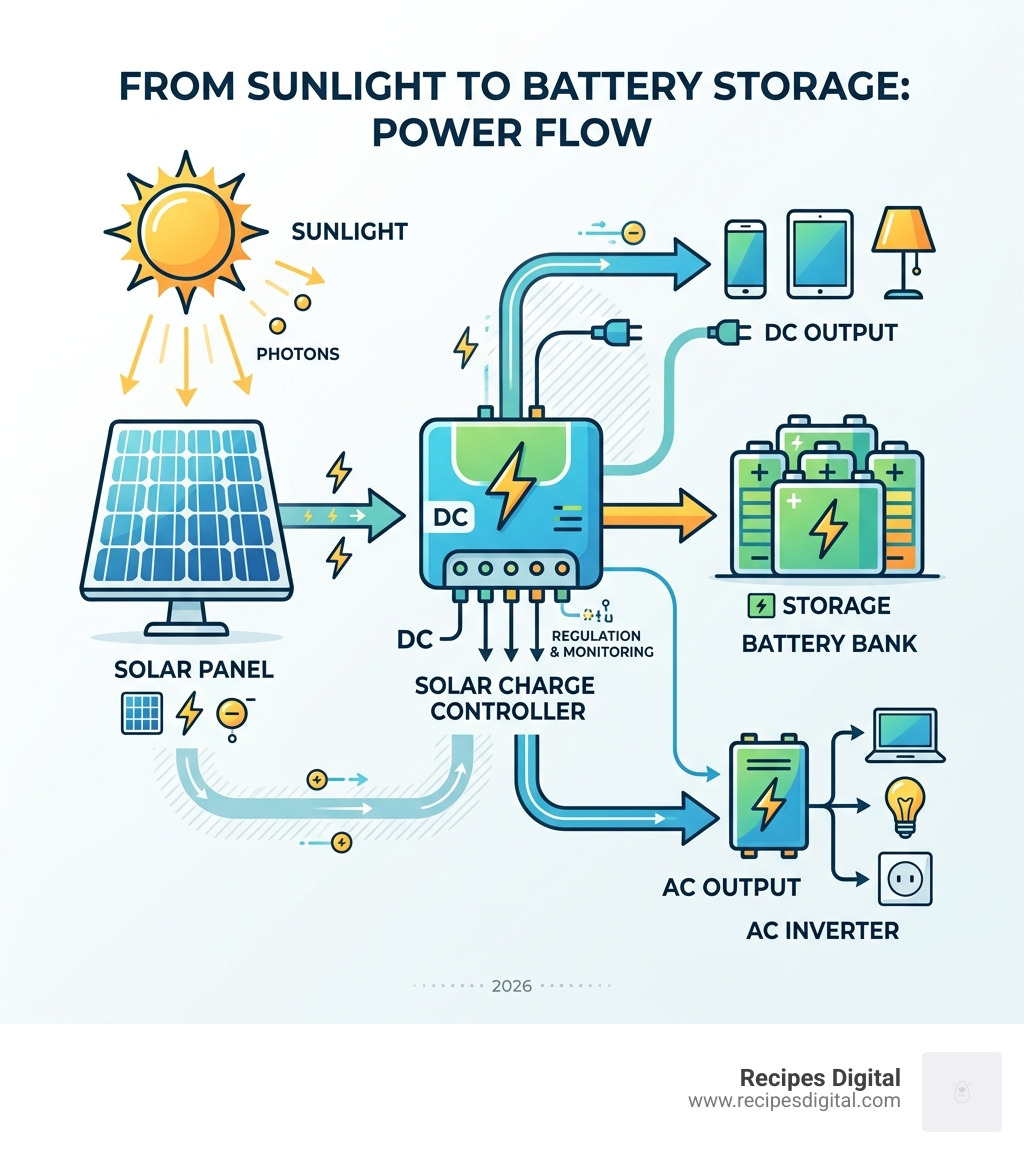
What is a Solar Battery Charger and How Does It Work?
At its core, a solar battery charger is a mini power plant. It relies on photovoltaic (PV) cells, usually made of silicon, to capture photons from sunlight. When these photons hit the cells, they knock electrons loose, creating a flow of direct current (DC) electricity.
But you can’t just wire a solar panel directly to a battery and hope for the best (well, you can for very tiny panels, but it’s risky!). Most systems require a solar charge controller. Think of the controller as the “brain” of the operation. It performs several vital tasks:
- Voltage Regulation: It ensures the voltage coming from the panel matches what the battery needs. For example, a “12V” solar panel might actually output 18V or 20V in bright sun; the controller steps this down so it doesn’t “cook” your battery.
- Preventing Natural Drain: Batteries have a habit of leaking power when they sit idle. A solar charger provides a steady “trickle” of energy to counteract this natural discharge.
- Stopping Sulfation: When lead-acid batteries sit in a discharged state, lead sulfate crystals build up on the plates (sulfation), which can permanently kill the battery. Smart maintenance technology keeps the battery at a healthy voltage level, preventing this crystalline buildup.
- Reverse Current Protection: Without a controller or a blocking diode, a solar panel can actually drain your battery at night! The controller ensures power only flows one way: from the sun to your battery.
By using these components, a solar battery charger provides a sustainable, eco-friendly way to keep your equipment ready for action.
Common Types and Applications for Solar Power
As of April 2026, the market for solar charging has expanded into specialized niches. We no longer just have “solar panels”; we have precision tools designed for specific jobs.
- Trickle Chargers: Small panels (usually 1.5W to 10W) designed to provide just enough power to offset the natural drain of a battery. Perfect for cars or motorcycles in storage.
- Battery Maintainers: These are “smart” chargers. They often include a built-in Battery Tender® Solar Charge Controller that monitors the battery’s state of charge and switches to a “float” mode once the battery is full.
- High-Wattage Portable Chargers: These are larger, often foldable panels ranging from 50W to 200W. A great example is the Solar 200 Watt Ebike Battery Charger – Sun200 – Electrify Bike, which is powerful enough to charge an electric bike in the middle of the wilderness.
- Solar Power Banks: Small, handheld devices with a built-in battery and a tiny solar panel on the back, primarily used for emergency phone boosts.
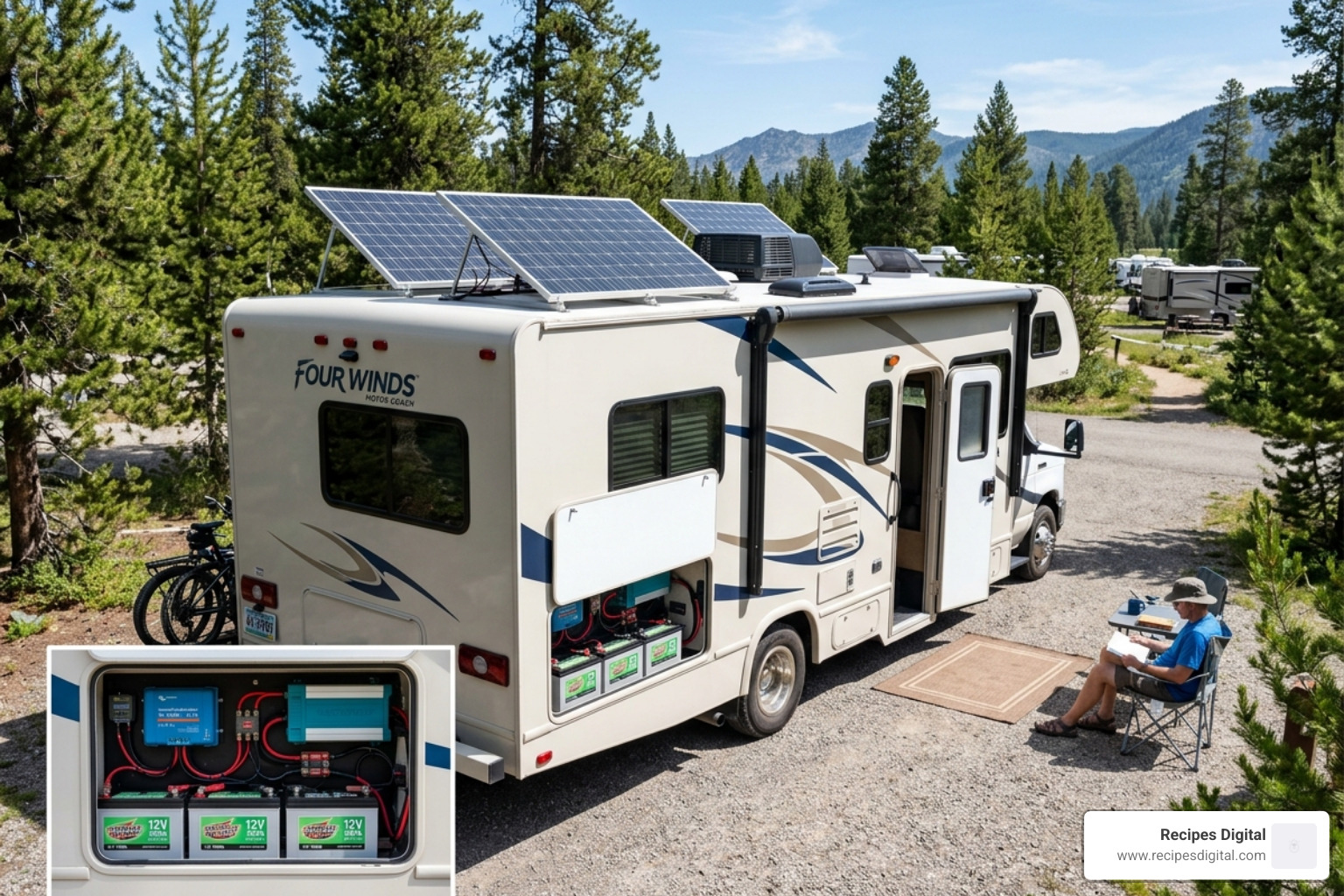
Using a Solar Battery Charger for Vehicles and Boats
Whether it’s a classic car in the garage or a boat docked at the marina, batteries hate being ignored. Marine environments are particularly harsh, requiring chargers with high weather resistance.
Most modern chargers are compatible with a wide range of battery chemistries, including:
- Lead-Acid (Flooded): The traditional car battery.
- AGM (Absorbed Glass Mat): Common in high-end cars and RVs.
- Gel: Often used in deep-cycle marine applications.
- LiFePO4 (Lithium Iron Phosphate): The modern standard for lightweight, high-capacity storage.
For boaters, a VEVOR 25W 12V Solar Panel Battery Charger is an excellent choice because it often features IP67 waterproofing, meaning it can handle a splash or a heavy rainstorm without shorting out.
Portable Solar Battery Charger Solutions for Outdoor Adventures
For those of us who love backpacking and camping, weight is everything. Portable solar chargers have come a long way. Modern monocrystalline panels offer the highest efficiency—often between 20% and 23%—meaning you get more power from a smaller surface area.
Many of these portable units now feature USB-C PD (Power Delivery) outputs, allowing you to charge not just your phone, but even smaller laptops or tablets directly from the sun. When we go off-grid, we look for “plug-and-play” simplicity: unfold the panel, point it at the sun, and plug in your device.
Key Features to Consider When Choosing a Solar Battery Charger
Don’t let the marketing jargon confuse you. When we evaluate a solar battery charger, we look at these specific technical specs:
1. MPPT vs. PWM Controllers
This is the big one.
- PWM (Pulse Width Modulation): Older, simpler, and cheaper. It’s like a light switch that turns on and off rapidly to keep the voltage steady. It’s about 70-80% efficient.
- MPPT (Maximum Power Point Tracking): The gold standard. It’s like an automatic transmission for your solar panel, constantly adjusting to find the “sweet spot” where the panel produces the most power. MPPT can be up to 30% more efficient than PWM, especially in cloudy weather.
| Feature | PWM Controller | MPPT Controller |
|---|---|---|
| Efficiency | 70% – 80% | 94% – 99% |
| Best Use Case | Small systems, trickle charging | Large systems, RVs, e-bikes |
| Cost | Low | Higher |
| Performance in Shade | Poor | Good |
2. Wattage and Voltage
You need to match the charger to your needs. A 5W panel is for maintenance; a 100W panel is for actually charging a depleted battery. Most vehicle systems are 12V, but you can find chargers ranging from 5V (for phones) up to 240V for industrial applications.
3. Weather Resistance
Look for an IP67 rating. This means the unit is dust-tight and can survive being submerged in a meter of water for 30 minutes. If your charger is going to live on the deck of a boat or the roof of an RV, don’t settle for anything less.
4. Safety Protections
A high-quality solar battery charger should include:
- Overheating protection: To prevent the unit from melting in the desert sun.
- Overcharge protection: To ensure it stops sending power when the battery is full.
- Short circuit protection: To prevent fires if the wires get pinched.
Determining the Right Size and Essential Accessories
How much power do you actually need? Here is a helpful statistic: A typical 15-watt solar panel will produce about one amp-hour (Ah) per hour of solar power in direct sunlight.
If you have a 100Ah battery that is 50% empty, you need to put 50Ah back into it. With a 15W panel, that would take 50 hours of perfect sunlight—which might take a week! This is why sizing is critical.
- For Maintenance: 5W to 10W is usually plenty to keep a healthy battery topped off.
- For Weekend Camping: 20W to 50W can keep your lights and phone charged.
- For Full Off-Grid Living: You’ll likely want 100W to 400W+ depending on your appliance usage.
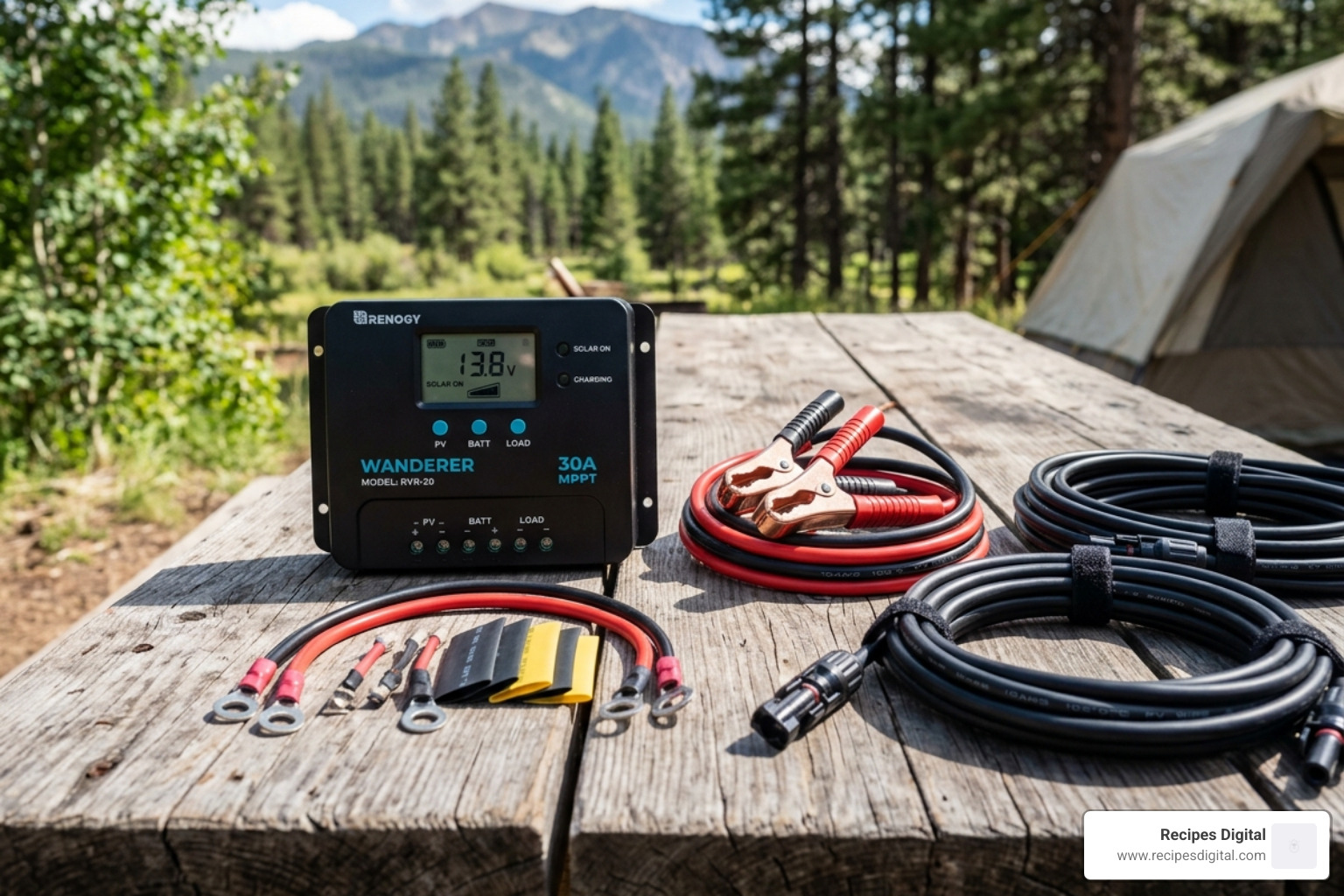
Essential Accessories
A panel alone isn’t always enough. To build a complete system, we recommend:
- Mounting Brackets: To secure the panel to your roof or a pole.
- Extension Cords: Solar panels usually need to be in the sun, while your battery stays in the shade.
- Connectors: Alligator clips are great for temporary use, but O-ring terminals provide a more secure, permanent connection for vehicles.
- Inline Diodes: These prevent the battery from discharging back into the panel at night if you aren’t using a controller.
Frequently Asked Questions
Can a solar battery charger work on cloudy days?
Yes, but with a catch. Solar panels don’t need direct heat; they need light. On a cloudy day, the panel receives “indirect” sunlight. You can expect the efficiency to drop to about 10% to 25% of its rated capacity. If you have a 100W panel, it might only put out 10W to 25W during a storm. This is where MPPT controllers really shine, as they can squeeze every bit of available energy out of those grey skies.
Do I need a charge controller for a small solar panel?
The general rule of thumb is that if the solar panel puts out less than 1/100th of the battery’s capacity (in Amp-hours), you might not need one. For example, a 5W panel on a large 100Ah truck battery is safe. However, for anything 10W or higher, we always recommend a controller to prevent overcharging and to ensure the longevity of your battery.
How long does it take to charge a battery with solar?
It depends on three things: the wattage of your panel, the size of your battery, and the amount of sunlight. Formula: (Battery Capacity in Ah × Discharge Percentage) / (Panel Amps per hour) = Charging hours. If you’re using a 20W panel (approx. 1.1 Amps) to charge a 20Ah battery that is half empty (10Ah needed), it will take about 9 hours of direct sun.
Conclusion
At Recipes Digital, we believe that modern living shouldn’t be tethered to a wall outlet. Whether you are looking to keep your classic car ready for a weekend drive or you’re planning a cross-country e-bike adventure, a solar battery charger is one of the smartest investments you can make for your sustainable energy toolkit.
By choosing the right wattage, opting for MPPT technology where possible, and ensuring your gear is weather-rated, you can enjoy the peace of mind that comes with free, renewable power.
Ready to dive deeper into sustainable energy? We provide digital resources for modern, energy-efficient living to help you navigate the transition to a greener future. More info about solar services
