
Watt’s Up with 20kW Solar Systems? Costs, Space, and DIY Realities
Is a 20kW Solar System the Right Power Solution for You?
A 20kW solar system is one of the most powerful residential and small commercial solar setups available today — and it’s becoming a popular choice for homeowners and business owners who are tired of high electricity bills and unreliable grid power.
Here’s what you need to know at a glance:
| Feature | Details |
|---|---|
| Daily energy output | 60–90 kWh per day |
| Monthly energy output | 2,000–3,600 kWh per month |
| Typical panel count | 42–60 panels (depending on wattage) |
| Roof space needed | 120–140 m² (approx. 1,300 sq ft) |
| System cost range | ~$24,000–$60,000+ installed |
| Payback period | 3–5 years (quality system) |
| System lifespan | 25–30 years |
| Best suited for | Large homes, small businesses, farms, high energy users |
A system this size easily covers the average U.S. household energy use of around 920 kWh per month — and then some. That extra capacity can power EV charging, central air conditioning, or get stored in batteries for use at night.
Whether you’re exploring solar for the first time or ready to go fully off-grid, this guide breaks down everything: costs, space requirements, components, real-world performance, and what DIY installation actually involves in April 2026.
What is a 20kw solar system and Who is it For?

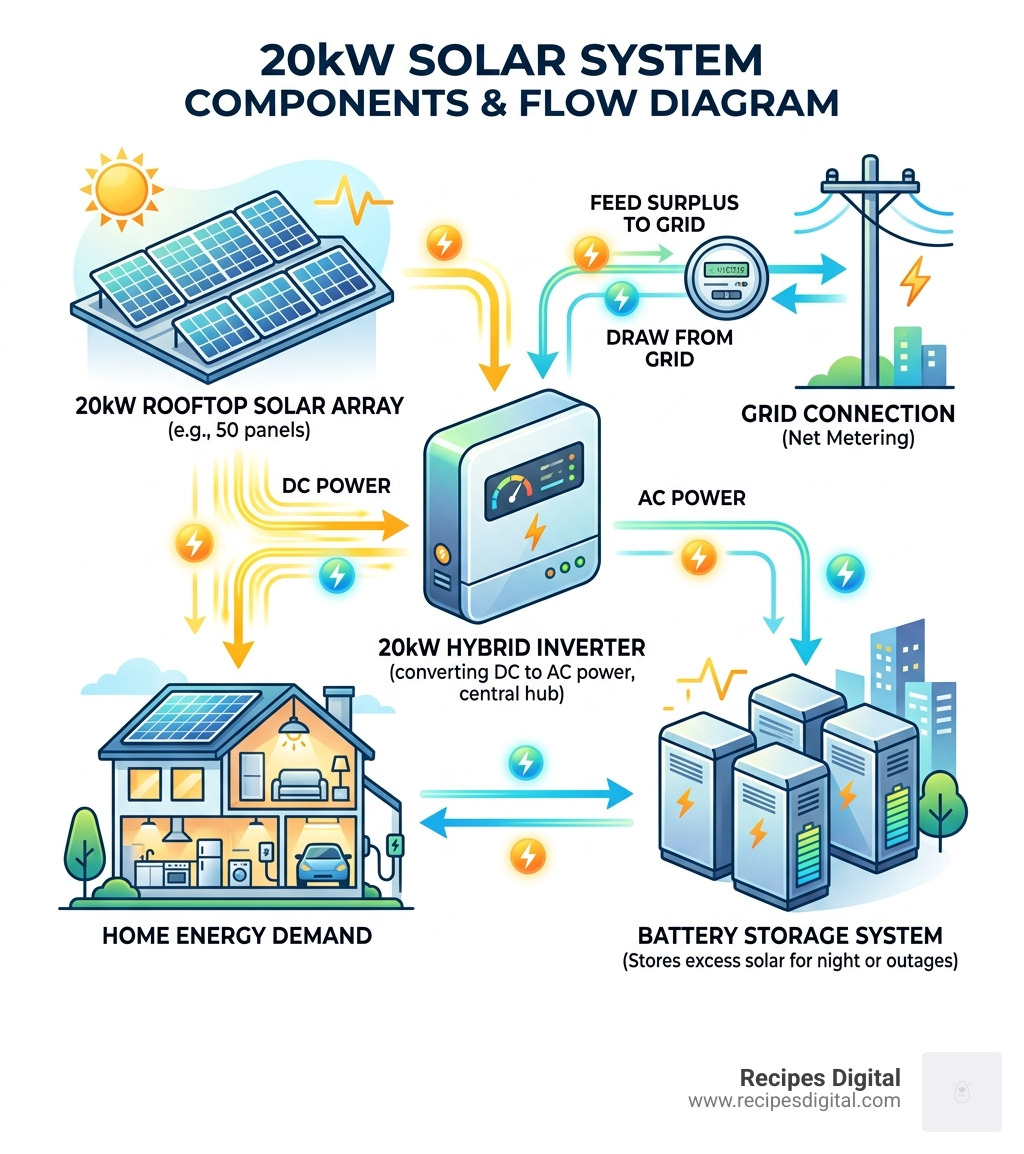
At its core, a 20kw solar system is a robust energy plant for your property. It typically consists of approximately 42 to 60 solar panels (depending on individual panel wattage) and a high-capacity 20kW inverter. In April 2026, these systems almost exclusively use CEC-approved components to ensure safety and eligibility for various government incentives.
But who actually needs 20,000 watts of solar power? While the average suburban home might get by on a 6.6kW or 10kW system, the 20kW tier is the “sweet spot” for several specific groups:
- Small to Medium Enterprises (SMEs): Local businesses with daytime operations—like workshops, small offices, or medical clinics—can often wipe out their entire operating electricity cost with a system this size.
- Large Residential Homes: If your home features a swimming pool, home automation systems, multiple central air conditioning units, and a large family, your energy needs likely exceed the capacity of standard residential kits.
- Electric Vehicle (EV) Owners: Charging one or two EVs daily adds a significant load to a home. A 20kw solar system provides the “fuel” to keep your cars running on 100% clean energy.
- High-Demand Amenities: Properties with guest houses, large-scale irrigation, or heated workshops require the heavy lifting that only a 20kW array can provide.
Is a 20kw solar system Right for Your Property?
Determining if this system is right for you comes down to your monthly bill. If your energy consumption sits between 2,400 and 3,600 kWh per month, you are the prime candidate.
We often see these systems installed on farms where refrigeration or pumping equipment runs 24/7, or on properties featuring extensive automation systems. Beyond the immediate energy savings, there is a tangible financial benefit to the property itself: studies from Zillow have shown that homes with solar can see a property value increase of up to 4.1%. It’s not just an appliance; it’s a capital improvement.
Core Components of the System
A 20kw solar system isn’t just about the panels on the roof. It is a complex ecosystem of hardware:
- Photovoltaic (PV) Modules: These are the panels themselves. In 2026, high-efficiency monocrystalline or bifacial modules (which catch light from both sides) are the standard.
- Inverters: This is the “brain” of the system. You might choose a single large string inverter, which is cost-effective, or micro-inverters attached to every panel. Micro-inverters are excellent if your roof has shading issues or multiple orientations.
- Hybrid Technology: Many modern 20kW inverters are “hybrid,” meaning they are ready to plug directly into a battery storage system without needing extra equipment.
- Racking Systems: This is the mounting hardware. It must be rated for high wind loads (up to 120 mph) and snow loads (up to 40 psf) to keep your investment secure.
- Smart Meters: These track how much energy you use versus how much you send back to the grid, which is vital for “net metering” credits.
- Battery Storage: While optional, adding a battery like the Tesla Powerwall or a similar high-capacity lithium-ion unit allows you to use your solar power after the sun goes down.
Energy Production and Performance Factors
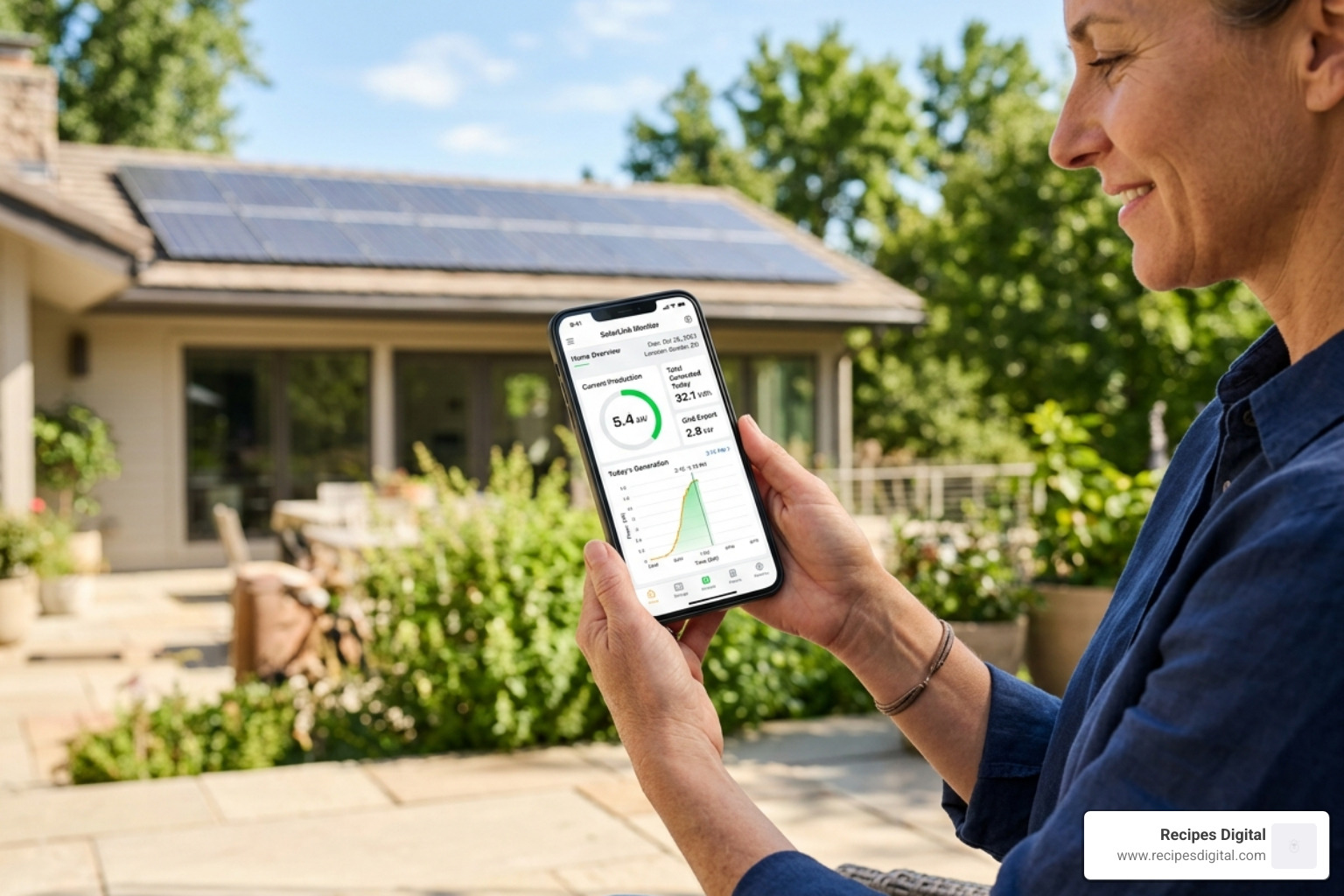
How much power can you actually expect? On average, a 20kw solar system generates between 60 and 90 kWh daily. Over a month, this adds up to a massive 2,000 to 3,600 kWh.
However, “rated power” and “real-world output” can differ. System losses—from heat, wiring resistance, and dust—usually account for an efficiency reduction of about 5% to 10% even in perfect conditions.
How Much Energy Does a 20kw solar system Produce?
Location is the biggest variable. For example, in a climate like Melbourne’s, you might see 60–90kWh daily, but this depends heavily on “sun hours.” A “sun hour” isn’t just an hour of daylight; it’s an hour where the sun’s intensity reaches a specific threshold (1,000 watts per square meter).
Assuming an average of 5 sun hours per day:
- Daily: 20kW x 5 hours = 100 kWh (theoretical) -> ~80-90 kWh (actual after losses).
- Monthly: ~2,400 to 2,700 kWh.
Even on cloudy or snowy days, your panels will work using indirect light, though the output may drop to 10-25% of its peak capacity.
Factors Affecting Real-World Output
- Orientation: For those of us in the Southern Hemisphere, North-facing is best. In the Northern Hemisphere, South-facing is the gold standard.
- Shading: A single chimney or tree casting a shadow can significantly drop the output of a string inverter system. This is where micro-inverters or DC optimizers save the day.
- Tilt Frames: If you have a flat roof, we recommend using tilt frames to elevate the panels. This maximizes sun exposure and helps panels “self-clean” when it rains.
- Degradation: High-quality panels come with a 25-30 year linear output warranty, usually guaranteeing at least 80-90% efficiency even after three decades of use.
Space Requirements and Installation Realities
Size matters when it comes to a 20kW array. You aren’t just putting a few panels up; you are covering a significant portion of your property.
Typically, a 20kw solar system requires 120–140m² of roof space (roughly 1,300 square feet). If your roof is cluttered with vents, skylights, or gables, you might struggle to fit 50+ panels. In these cases, a ground-mounted system is a fantastic alternative, provided you have about 1,150 to 1,300 square feet of unobstructed, sun-drenched land.
DIY Kits vs. Professional Installation
The rise of “DIY Solar Kits” has changed the game in April 2026. A DIY 20kW kit might start around $31,000, while a fully installed professional system could cost $45,000 to $60,000.
The Pros of DIY:
- Savings: You can save $10,000 or more on labor costs.
- Knowledge: You’ll know your system inside and out.
- Support: Modern kits come with permit plans and interconnection services to help you navigate the paperwork.
The Pros of Professional Installation:
- Safety: You are dealing with high-voltage DC electricity. SAA Accredited or certified installers have the training to handle this safely.
- Warranty: Many manufacturers only honor full warranties if the system is installed by a licensed professional.
- Speed: A professional crew can often install a 20kW array in 2-3 days, whereas a DIYer might take several weekends.
Mounting and Racking Solutions
The racking is the skeleton of your system. For most homes, flush mounts (where panels sit parallel to the roof) are used. However, the type of roof matters:
- Tin/Klip-lok: Easiest to install on and very secure.
- Tile: Requires specific “roof hooks” to avoid cracking tiles.
- Ground Mounts: Require concrete footings or “earth screws” but allow for perfect orientation and tilt.
Your racking must be corrosion-resistant (anodized aluminum is standard) and feature integrated wire management to prevent cables from dangling and degrading over time.
The Financial Reality of a 20kw solar system: Costs and Savings
Let’s talk numbers. Investing in a 20kw solar system is a significant financial commitment, but the returns are equally substantial.
| System Type | Estimated Cost Range (USD/AUD) | Key Benefit |
|---|---|---|
| Grid-Tied | $24,000 – $35,000 | Lowest entry cost; uses grid as “battery.” |
| Hybrid | $35,000 – $50,000 | Battery-ready; provides backup power. |
| Off-Grid | $55,000 – $85,000+ | Total independence; requires massive battery bank. |
In April 2026, many regions still offer a 26% Solar Tax Credit or similar local rebates. This can slash your out-of-pocket costs by thousands of dollars. Additionally, “Net Metering” allows you to sell excess energy back to the grid, earning credits that offset your bill during the winter or at night.
Payback Period and Long-Term ROI
For a high-quality 20kw solar system, the average payback period is 3 to 5 years. Considering the system lasts 25 to 30 years, you are looking at 20+ years of essentially “free” electricity.
Annual savings can be massive. For a small business (SME), a 20kW system can save upwards of $7,000 per year depending on local energy rates and feed-in tariffs. Over the life of the system, that’s over $150,000 in avoided costs!
Enhancing Value with Battery Storage
Adding battery storage is the “secret sauce” for modern energy independence. While it increases the upfront cost, it allows for Peak Shaving—using your stored battery power during the evening when grid electricity is most expensive.
Advanced lithium-ion batteries also provide Grid Independence. If the neighborhood goes dark, your 20kW array and battery bank keep your lights on, your fridge cold, and your internet running. This “AC coupling” approach allows you to add batteries to an existing system later if your budget doesn’t allow for them today.
Why Choose a 20kW Solar System Over Traditional Energy Backups
When people think of backup power, they often think of gas or diesel generators. However, a 20kw solar system paired with batteries offers several advantages over mechanical standby systems:
- Zero Fuel Requirements: Generators require propane, natural gas, or diesel. In a long-term outage, fuel supplies can run dry. Solar is fueled by the sun, which (thankfully) shows up every day.
- Noise Reduction: A 20kW generator can produce 65-70 dB of noise—roughly the sound of a vacuum cleaner running constantly in your yard. Solar is completely silent.
- Environmental Benefits: Solar produces zero emissions. Traditional generators contribute to local air pollution and carbon emissions.
- Maintenance: Generators have engines with moving parts, oil, and filters that need regular servicing. Solar systems are solid-state with no moving parts, leading to much higher long-term reliability.
- Instant Response: A solar battery backup can kick in within milliseconds, so your clocks don’t even blink. A generator typically takes 10-30 seconds to start and transfer power.
Frequently Asked Questions about 20kW Solar Systems
How many panels are needed for a 20kW system?
The number of panels depends entirely on their wattage. In the past, you might have needed 80 panels. Today, with high-efficiency modules:
- Using 475W panels: You need 42 panels.
- Using 400W panels: You need 50 panels.
- Using 330W panels: You need 60 panels. Higher wattage panels are usually more expensive but save significant roof space.
What is the maintenance and lifespan of the system?
Solar systems are incredibly low-maintenance. We recommend:
- Cleaning: Rinse panels with water twice a year to remove dust and bird droppings.
- Monitoring: Use your system’s app to check for any “underperforming” panels once a month.
- Inverter Check: Most inverters last 12-15 years, so you should budget for one replacement during the 30-year life of the panels.
Can a 20kW system run a house off-grid?
Yes, a 20kw solar system is more than large enough to take a standard home off-grid. However, the solar panels are only half the battle. You will need a significant battery bank (usually 30kWh to 60kWh of storage) and a backup plan for extended periods of rain. A professional energy audit is essential before cutting the cord to the grid to ensure your “critical loads” (well pumps, medical equipment, refrigeration) are always covered.
Conclusion
A 20kw solar system is more than just a home improvement; it’s a declaration of energy independence. Whether you’re a business owner looking to slash overhead or a homeowner building a sustainable sanctuary, this scale of solar provides the power, reliability, and financial return that modern living demands.
At Recipes Digital, we believe that the recipe for a better future starts with sustainable energy. From choosing the right panels to finding the perfect battery storage solution, we are here to provide the digital resources you need for a modern, energy-efficient life.
Ready to start your solar journey? More info about solar services can help you find the right path toward a cleaner, cheaper, and more sustainable home. Harness the sun and take control of your “Watt’s Up” today!
